

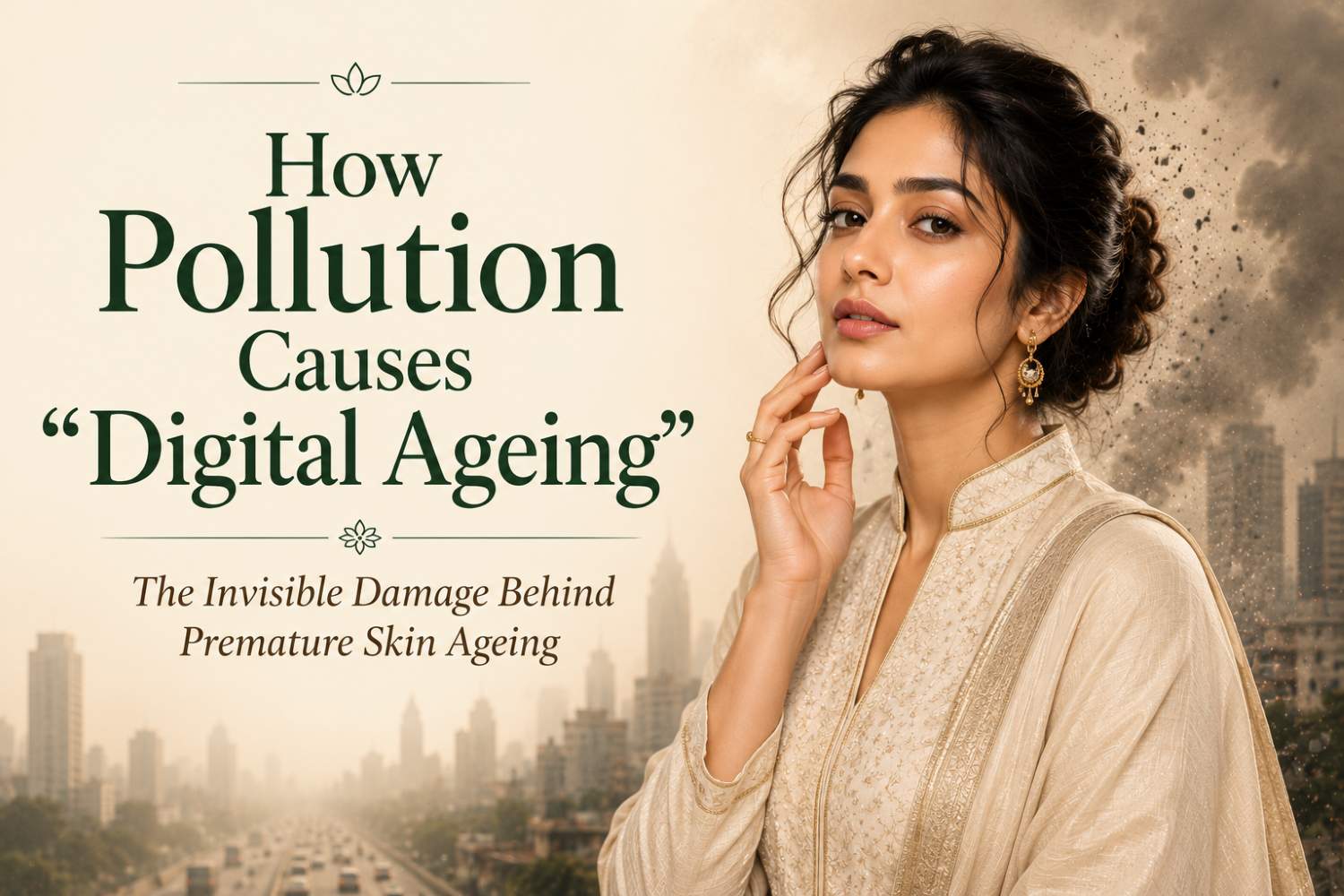
Introduction: Aging Is No Longer Just About Age
For years, skin aging has been linked to just growing older. Many people think wrinkles, fine lines and loss of elasticity appear gradually with time. Although aging is natural, modern skin faces more challenges that impact it more badly.
Today, people spend hours in front of screens, live in cities that are highly polluted, and are under environmental stress and UV exposure. All these factors constantly worsen the skin condition. As a result, skin aging is no longer influenced only by birthdays. It is increasingly shaped by lifestyle and environment.
The newest term that has emerged is “digital ageing”, which shows the premature ageing effects linked with modern lifestyles. While discussions around digital ageing often focus on blue light from devices, there is another major contributor that receives far less attention: pollution.
No matter how well you take care of your skin, pollution, environmental stress and digital screening silently impact your skin every day. It increases oxidative stress, weakens the skin barrier and contributes to inflammation, which even accelerates the collagen breakdown over time. This creates many of the same visible changes people associate with aging.
Therefore, it is important to understand how pollution and environmental stress contribute more to digital ageing. And why protecting the skin today requires more than just anti-aging products. It requires defending the skin from the environment it lives in.
What Is Digital Ageing?
Digital ageing means visible and invisible skin changes that are linked with the modern environmental and technological lifestyle. These changes may include:
- Dullness
- Uneven texture
- Fine lines
- Loss of elasticity
- Dryness
- Increased sensitivity
- Premature wrinkles
This concept has become popular in recent times as youngsters are showing signs of bad skin and fatigue at a higher rate than expected. While screen exposure became the headline topic, researchers and skincare experts increasingly recognized that digital ageing is rarely caused by one factor alone.
Instead, it is usually the result of multiple stressors working together:
- Pollution
- UV exposure
- Blue light exposure
- Stress
- Sleep disruption
- Dehydration
- Poor lifestyle habits
Why Pollution Is a Daily Skin Stressor?
Apart from occasional skincare concerns, pollution is something that people encounter every day. In urban environments, the skin is regularly exposed to:
- Dust particles
- Vehicle emissions
- Industrial pollutants
- Smoke
- Environmental toxins
All these pollutants don’t settle on the surface of the skin but also interact with the skin in ways that impact its health deeply. Over time, stress creates a buildup beneath the surface, affecting the skin, which appears dull, fatigued and irritated. This is why pollution-related aging is often described as silent aging.
How Pollution Creates Oxidative Stress?
This is one of the precise approaches when pollution impacts the skin through oxidative stress. Oxidative stress occurs when unstable molecules called free radicals overwhelm the skin’s natural defense systems.
These free radicals damage important skin components, including:
- Collagen
- Elastin
- Cell membranes
- Barrier lipids
Such damage accumulates over time when skin becomes less efficient at balancing itself with structure and resilience. This is essentially one of the major biological pathways via pollution, accelerating aging.
The Link Between Pollution and Collagen Breakdown
Collagen is responsible for maintaining skin firmness, elasticity, and bounce. Healthy collagen helps the skin:
- Stay firm
- Recover efficiently
- Maintain smooth texture
- Resist sagging
Pollution contributes to collagen decline by increasing inflammation and oxidative damage within the skin. Over time, this weakens collagen fibres and interferes with the skin’s ability to maintain structural support.
The result may include:
- Fine lines
- Reduced elasticity
- Loss of firmness
- Premature aging signs
Why Pollution Makes Skin Look Tired?
Many do associate pollution damage with breakouts and dirt buildup, while persistent dullness in skin as common affect. Pollution interferes with healthy skin function by creating continuous environmental stress.
As a result, the skin may appear:
- Less radiant
- Uneven in tone
- Rough in texture
- Fatigued
- Dehydrated
Pollution and Barrier Damage
Your skin barrier acts as the first line of defence against the outside world.
A healthy barrier:
- Retains hydration
- Reduces irritation
- Protects against environmental stress
- Supports skin balance
Pollution continuously challenges this protective layer.
Over time, repeated exposure can weaken barrier function, making the skin more vulnerable to:
- Water loss
- Sensitivity
- Inflammation
- Irritation
Once the barrier becomes compromised, the skin struggles to recover from daily stress effectively.
This creates an environment where visible aging can accelerate.
Why City Living Increases Risk?
People residing in urban cities and metro environments do face a greater level of pollution and UV exposure than those living in cleaner surroundings. Daily commuting, traffic congestion, industrial emissions, and crowded city conditions expose the skin to pollutants for extended periods.
It doesn’t mean city life automatically impacts the skin, but over time, it creates environmental pressure. When combined with UV exposure, Stress, Poor sleep, and screen time, the cumulative impact becomes much greater. This is one reason digital ageing is often discussed more frequently in urban populations.
The Role of Inflammation
This is one of the important issues between skin concerns like premature aging and pollution. The repeated UV exposure and pollution stress trigger low-level chronic inflammation over time, with visible irritation and sensitivities. This inflammation often remains hidden.
However, over time, it contributes to:
- Collagen degradation
- Reduced elasticity
- Slower repair processes
- Increased sensitivity
Why Screen Time and Pollution Work Together?
Digital ageing is rarely caused by screens alone.
Modern lifestyles often combine:
- Long screen hours
- Indoor air exposure
- Urban pollution
- Sleep disruption
- Mental stress
These factors interact rather than operate separately.
For example, someone spending long hours in front of screens may also:
- Spend less time recovering outdoors
- Experience increased stress
- Sleep less effectively
- Live in highly polluted environments
The result is a cumulative burden on skin health.
This is why pollution is increasingly considered part of the digital ageing conversation rather than a completely separate issue.
Why Younger Skin Is Not Immune?
The most common misconception about pollution-related aging is they affect older individuals. Although the fact is that environmental damage begins with accumulating it more easily. Even younger skin can experience:
- Barrier stress
- Early collagen decline
- Increased dullness
- Dehydration
- Uneven texture
These early changes may not appear dramatic initially, but they often create the foundation for more visible aging later. This is why prevention matters far more than waiting for visible signs to appear.
Protecting Skin From Pollution
We can’t avoid environmental stress and pollution, we need to care for our skin more consistently to reduce the adverse effects. The important thing is to follow the healthy habits like;
- Gentle cleansing to remove daily buildup
- Maintaining hydration
- Supporting the skin barrier
- Daily sun protection
- Avoiding overly aggressive skincare routines
Apart from its goal, it isn’t perfect, but it creates a stronger and more resilient environment for the skin. Healthy skin handles environmental stress more effectively than compromised skin.
Why Long-Term Skin Health Matters?
People usually focus on correcting the visible concerns once they start noticing them, but pollution or digital ageing develops gradually. When the time fine lines, wrinkles and persistent dullness become obvious, the damage has been done.
Maybe the quick fixes can give instant results, but correct yourself, here they aren’t permanent anymore. This is why skincare today is increasingly shifting toward prevention and resilience rather than correction alone. Supporting the skin consistently helps reduce the long-term effects of environmental stress.
Conclusion: Pollution Is a Hidden Driver of Modern Skin Aging
Still, people aren’t much concerned or aware of digital ageing if discussed, then limited to screens and technology. But UV exposure, pollution and other environmental stress equally and silently play an important role in damaging the skin health. Through oxidative stress, inflammation, barrier disruption, and collagen breakdown, pollution quietly accelerates many of the visible changes people associate with aging.
The damage often builds beneath the surface long before it becomes obvious. What begins as occasional dullness or dehydration can eventually contribute to reduced elasticity, fine lines, and a tired-looking complexion.
Understanding this connection changes how we think about skincare. It becomes less about treating aging after it appears and more about protecting the skin from the daily environmental stress that contributes to it. Because in the modern world, healthy skin is not just about managing age. It is about managing the environment your skin faces every single day.
Keyphrases : signs of pollution damage on skin, does pollution break down collagen, what exactly is digital ageing skin, how to protect skin barrier from urban pollution, skincare routine for environmental stress