
Introduction: The Silent Shift Under Your Skin
We don’t wake up one day thinking deeply about our collagen, not because we aren’t taught to track it, the same as weight, diet and sleep habits. This is exactly where it catches so many off guard. Precisely, the fact is simple but often ignored.
Most people think collagen is all about when you see fine lines and wrinkles, but that’s not true. It begins earlier and silently without any visible signs. By the time you start noticing it, damage has been done, as it’s already happening for years.
It’s a kind of invisible and slow decline which is commonly referred to as “collagen cliff’’. That’s not a sudden drop or happens overnight, but it feels like when you start noticing the effects seriously. Skin that was rejuvenated and firm years back begins to loosen. The fine lines seem to be temporary, but stay forever; recovery gets slow. That youthfulness in skin with its natural glow becomes harder to maintain.
What Is Collagen and Why Does It Matter So Much?
Among the most abundant proteins in the body, collagen is one that cannot be left in the queue. It acts as the structure that holds everything together, like an internal support system of skin, hair, nails, joints, and even bones. Stronger collagen levels make skin appear firm, and with age, it starts declining; the body can’t keep up at the same pace. Collagen isn’t permanent, and the body produces it naturally, although the production is not constant throughout one’s whole life.
The Early Decline: Starting in Your Mid-20s
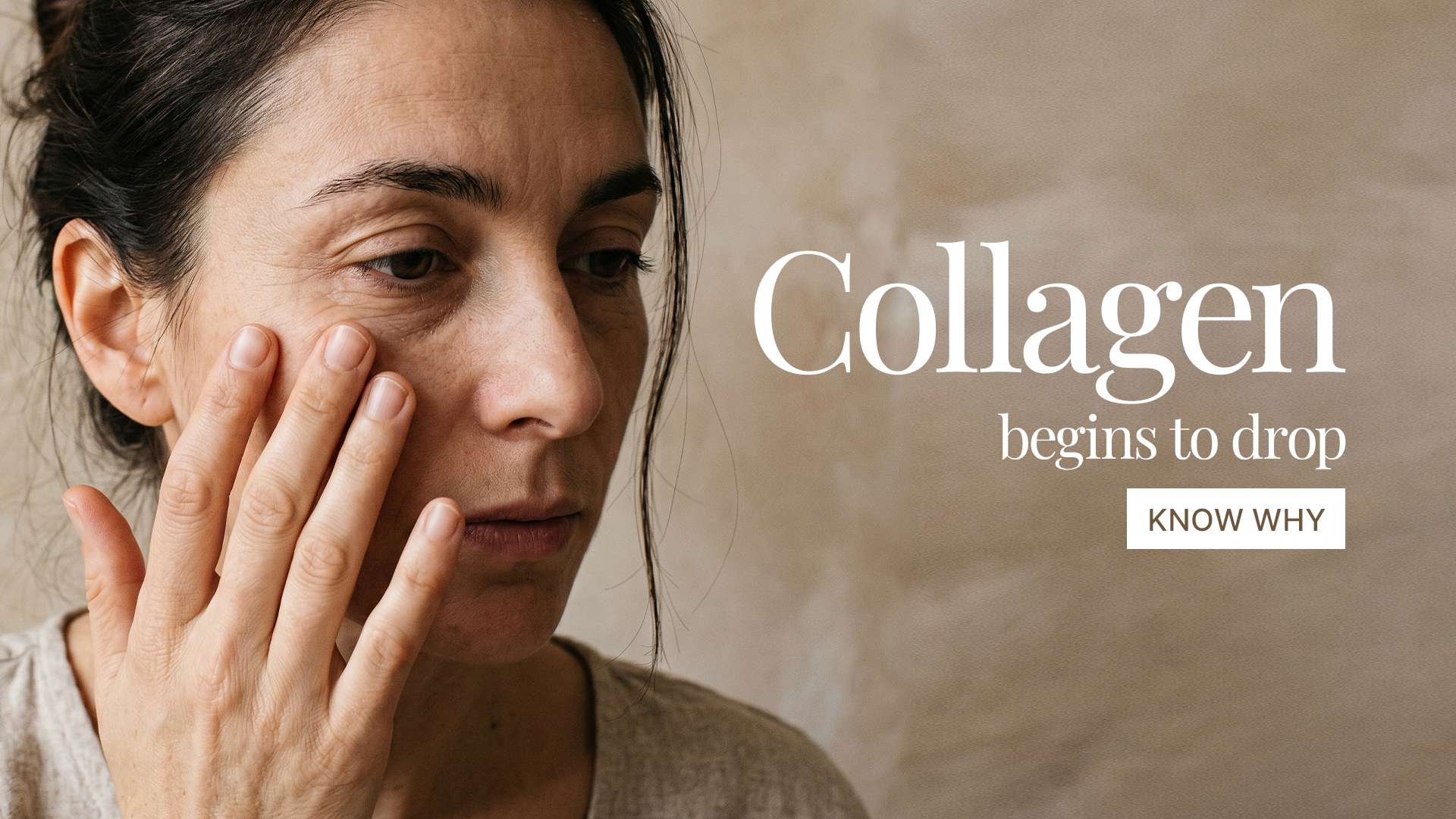
Most people don’t even realize that collagen production starts declining in their mid-20s. It’s not dramatic but proven, although not in the way that may be immediate, but it still happens silently. Every year, the body produces less collagen than the year before.
Now the question comes, how can we fix it? We cannot stop that declining collagen production, but we can slow it down with the adoption of healthy lifestyle choices. If you want to look fresh and young for years, then take care of your wellness internally to strengthen collagen production.
Maybe everything that appears normal isn’t in reality, especially when there is no urgency to think about collagen. That’s why most people ignore it completely. Beneath the skin layers, the silent slowing of collagen production will impact its repair process and natural firmness, and elasticity begins to reduce very gradually. As it may be unnoticeable, it sets a stronger foundation for years to come.
The Turning Point: Around 40, Things Accelerate
As people aren’t aware of that early age decline of collagen, they start seeing visible signs in their mid-30s or 40s. That’s a real shift when collagen loss accelerates and becomes noticeable. During this time, the body’s ability to produce and maintain collagen drops quickly.
It’s the time when collagen cliff truly makes sense, when people feel changes in skin all of a sudden, which was happening silently years back. People in their 40s can easily start noticing visible signs such as;
- Fine lines are becoming deeper and more permanent
- Skin is losing its firmness and starting to sag
- Dryness that doesn’t go away easily
- Slower healing of skin or injuries
- Hair becoming thinner or weaker
Why People Don’t Notice It Until It’s Happening?
This is one of the biggest factors people ignore in collagen health. Until there are no immediate warning signs or visible reasons, such as weight or fatigue, it builds slowly and secretly. The next reason is that early years create a false sense of security as skin looks good, naturally healthy. This assumption becomes the reality, which makes it less effort for skin health. Many are even focused on skincare linked with appearance rather than long-term skin health.
The lack of awareness is almost a prime factor, as many of us associate aging with wrinkles, but without knowing what is causing them underneath. By the time the surface changes appear, the deeper structural loss has already progressed.
Lifestyle Factors That Speed Up the Collagen Cliff
Aging is natural, but adopting certain habits that aren’t healthy can cause collagen production to decline faster. Such factors push you closer to the cliff at an earlier-than-expected rate.
One of the biggest reasons is sun exposure. The harmful impact of UV rays breaks down collagen fibres and lowers the body’s ability to produce new ones as quickly. Next comes the poor diet; a lack of proteins, vitamins and antioxidants can limit the building blocks needed for collagen development.
Followed by smoking and alcohol, which also reduce the blood flow and damage collagen. Other factors like stress, imbalanced hormones and lack of sleep slow down the repair process of collagen and its renewal.
These factors don’t show instant damage, but over time, they add up and speed up visible aging.
The Emotional Side of the Collagen Cliff
Unlike physical changes, emotional stress is another chapter of the whole collagen cliff story and precise but ignored. When people start noticing the changes in skin appearance, it feels like it’s happening too fast and immediately. That brings confusion in the mind with wonders on check for routine and products to give instant results, which may feel more ineffective. This wholesome phase causes more frustration, which even leads to a lack of confidence.
What makes it harder is that no one prepares you for this shift. Because it is not widely discussed, it feels unexpected, even though it is completely natural.
Can You Slow Down the Process?
The fact is, we cannot stop aging, although we can support the body to maintain collagen for longer. The key is to keep consistency and awareness. Eating a balanced diet including proteins, vitamin C and keeping hydrated will help maintain skin elasticity and structure. Even the use of perfect sun protection measures is effective in preventing collagen damage from UV rays and environmental stress.
Following the skincare regimen that focuses on long-term skin health rather than quick fixes will also help maintain skin quality. Importantly, starting all measures early makes a huge difference from keeping skin stressed and waiting until visible signs appear, as it will lose ground to maintain it.
Why Prevention Matters More Than Repair?
You must be aware—prevention is better than cure, but also easier than corrections. Because once the collagen is lost, rebuilding or rejuvenating it would be an almost insurmountable task. Although advanced skincare treatments and products can help improve the appearance, they cannot fully restore what it was before.
This is where you must get aware within 20s and 30s, as even taking small steps and keeping consistency for years will not let you regret in future. It is not about doing everything perfectly, but about being mindful of long-term skin health.
The Final Verdict: A New Way to Think About Aging
The biggest truth about collagen cliff isn’t associated with visible signs, as it’s already happening silently. Rather than seeing aging as sudden changes, it is important to understand that it is a continuous process; we cannot stop it, but we can delay it.
The collagen cliff isn’t a single moment but a gradual journey that becomes visible at a certain point in age. With aging, collagen loss is obvious, but being aware of it will make one less fearful and anxious to look for quick fixes. It is not about stopping time. It is about staying aware of what your body is already doing and supporting it in the best way possible.
Keywords : Collagen Decline, Slowing of Collagen Production, Breaks down Collagen Fibres, Long term skin health, Healthy lifestyle choices, strengthen collagen production