

How Stress Breaks Down Collagen — and Skin Recovery Strategies?
Have you ever heard that stress is eating away your glow? Well, people don’t say that to make you combat stress; they say this because they see it. People who have experienced prolonged stress can look older. Chronic stress doesn’t just make you feel uneasy; it also actively destroys the collagen, making your skin appear dull and fatigued. It literally eats your collagen. As you dive into this article, you will discover more about the science behind how stress ages your skin, along with skin recovery strategies you can opt for.
Your Skin Knows What You’ve Been Through
It is not just the inadequate sleep, the missed meals, or the dehydration that makes you look dull. These things matter — but one such reason that can disrupt your skin’s radiance is “Chronic Stress”. Your skin actually reflects what emotion you’re going through. Your skin will look bright and radiant when you are happy; similarly, your skin looks dull and tired when you’re tense.
A biochemical process starts when the body enters a sustained stress response. During this response, it releases hormones that can directly activate enzymes that break down collagen. It destroys the collagen that skincare products struggle to rebuild. Due to stress, cortisol-driven collagen degradation happens throughout the body. It continues until the stress response is active. All of it is not happening at the surface level; it’s all taking place inside the dermis. Hence, both stress and skincare are closely linked.
Cortisol: The Stress Hormone
The adrenal glands release cortisol (stress hormone) when the hypothalamic-pituitary-adrenal (HPA) axis detects a threat. This threat can be real or imagined, physical or psychological. If activated in short bursts, it’s helpful as it mobilises energy and sharpens focus. It also suppresses non-essential functions and prepares the body to respond to an immediate challenge. All this while, everything is fine.
Cortisol becomes problematic when it never fully switches off. Chronic stress produced by work pressure, relationships, finances, or factors keeps cortisol elevated. This can range from hours-to-days-to-weeks to months. Read on to understand how cortisol damages your skin’s collagen:
When Cortisol levels are high, they stimulate the production of zinc-dependent enzymes, matrix metalloproteinases (MMPs). MMPs’ biological role is to degrade extracellular matrix proteins, which include both collagen and elastin. MMPs serve a skin repair function and remove damaged collagen to promote new synthesis. But when cortisol remains elevated, those same MMPs degrade collagen faster than collagen is produced. This results in huge collagen loss.
Not just that, cortisol directly suppresses fibroblast activity that helps synthesise new collagen. It’s not dramatic, but all science shows that stress makes you appear older than your age.
The Four Ways Stress Dismantles Your Skin
Cortisol-driven collagen degradation is followed by several overlapping pathways. Each compounds the others. Let’s begin:
1. Cortisol Activates Collagen-Damaging Enzymes
Chronic stress elevates cortisol, which increases MMP activity, degrading the collagen matrix in the dermis.
2. Cortisol Disrupts the Skin Barrier
Cortisol disrupts the repair mechanisms in the dermis. It not only suppresses skin immunity but also impairs barrier repair. All of this facilitates the easy penetration of UV radiation, pollutants, and allergens, leading to collagen degradation.
3. Chronic Skin Inflammation – “Inflammaging”
Stress activates the release of pro-inflammatory cytokines. Cytokines are molecules that trigger and sustain inflammatory responses. Chronic inflammation is often associated with accelerated skin ageing; the specific term for this is inflammaging. Therefore, the inflammatory cascade must remain under control.
4. Stress Disrupts the Sleep Cycle
Chronic stress is directly proportional to poor sleep schedules. These two are so intertwined and almost inseparable in skin cell mechanisms. But deep sleep is the most crucial time for skin repair and collagen production. When elevated cortisol levels disrupt the sleep cycle, skin accumulates a deficit in collagen synthesis. This compounds over weeks and months, making your skin appear exhausted and dull.
What Stress-Elevated and Collagen-Depleted Skin Looks Like
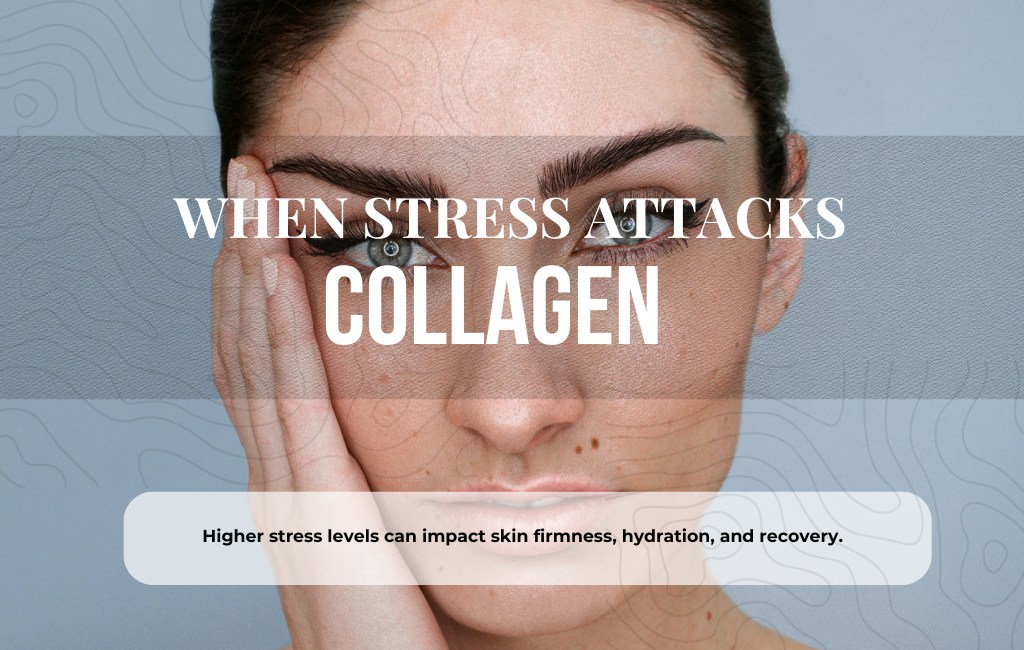
- Skin begins to lose its radiance
- Lines deepen quickly, particularly around the eyes and mouth
- Skin begins to feel “thin” and looks slightly deflated or flat
- Skin becomes sensitive and reactive to skin care products
- Skin experiences a delayed healing timeline
- Pores appear larger
If you witness this cluster of symptoms and you’re under sustained stress, then you need to address this. The solution lies in addressing both the stress biology and the collagen deficit.
Recovery Strategies to Rebuild Lost Collagen
The best part is the collagen lost to chronic stress can be rebuilt. But don’t expect quick miracles, as the timeline will be longer and will require your consistent effort. Let’s begin the collagen synthesis strategy below:
Boost Collagen Via Dual Attack
Both oral supplements and topical applications play a vital role here to address collagen depletion. Topical collagen peptides or signal peptides like Palmitoyl Pentapeptide-4 (Matrixyl), Palmitoyl Tripeptide-38 (Matrixyl Synthe’6), and GHK-Cu (copper peptides) help stimulate collagen synthesis. GHK-Cu is known to boost anti-cortisol activity in skin cells, as it performs during elevated cortisol too. On the other hand, oral marine collagen peptides trigger the fibroblast activation systemically to synthesise new collagen. Both require consistency and patience.
Vitamin C — the non-negotiable cofactor
Vitamin C is one of the most crucial cofactors during collagen synthesis. It is required by hydroxylate proline and lysine enzymes to boost fibroblast activity. Chronic stress depletes vitamin C stores, which in turn affects collagen production.
Protect the Compromised Barrier
Consistent use of moisturisers containing ceramides can replenish the barrier lipids compromised by cortisol levels. It also helps reduce transepidermal water loss and prevents inflammation that amplifies collagen degradation.
Use Anti-Inflammatory Ingredients to Reduce the MMP Load
Anti- inflammatory ingredients like Niacinamide, Green tea extract (EGCG), and Centella asiatica (Gotu Kola) help reduce MMP burden. These ingredients will not just help promote collagen production but also reduce the inflammatory environment that causes collagen breakdown.
The Lifestyle Changes
A stress-free lifestyle is almost impossible these days, but we can somewhat try to follow a good lifestyle. No skincare can substitute for consistent lifestyle changes. Regular moderate exercise, a good sleep cycle, addressing nutritional deficiencies, and meditation help regulate cortisol levels.
Stress Is Anti- Skincare Ingredient
We all know every conversation revolves around skincare products and regimens. But people ignore that the amount of stress they take on only hampers the tissues from the base level, and rebuilding that glow takes time. It’s time to keep your cortisol levels in check, as it’s rapidly depleting your collagen. Address it from both directions — topical collagen peptides and oral supplementation. Remember, stress can’t be ignored, but it can be addressed with measurable efforts.
Keyphrases : does stress cause collagen loss, how stress ages your face, cortisol skin damage, how to rebuild collagen naturally