
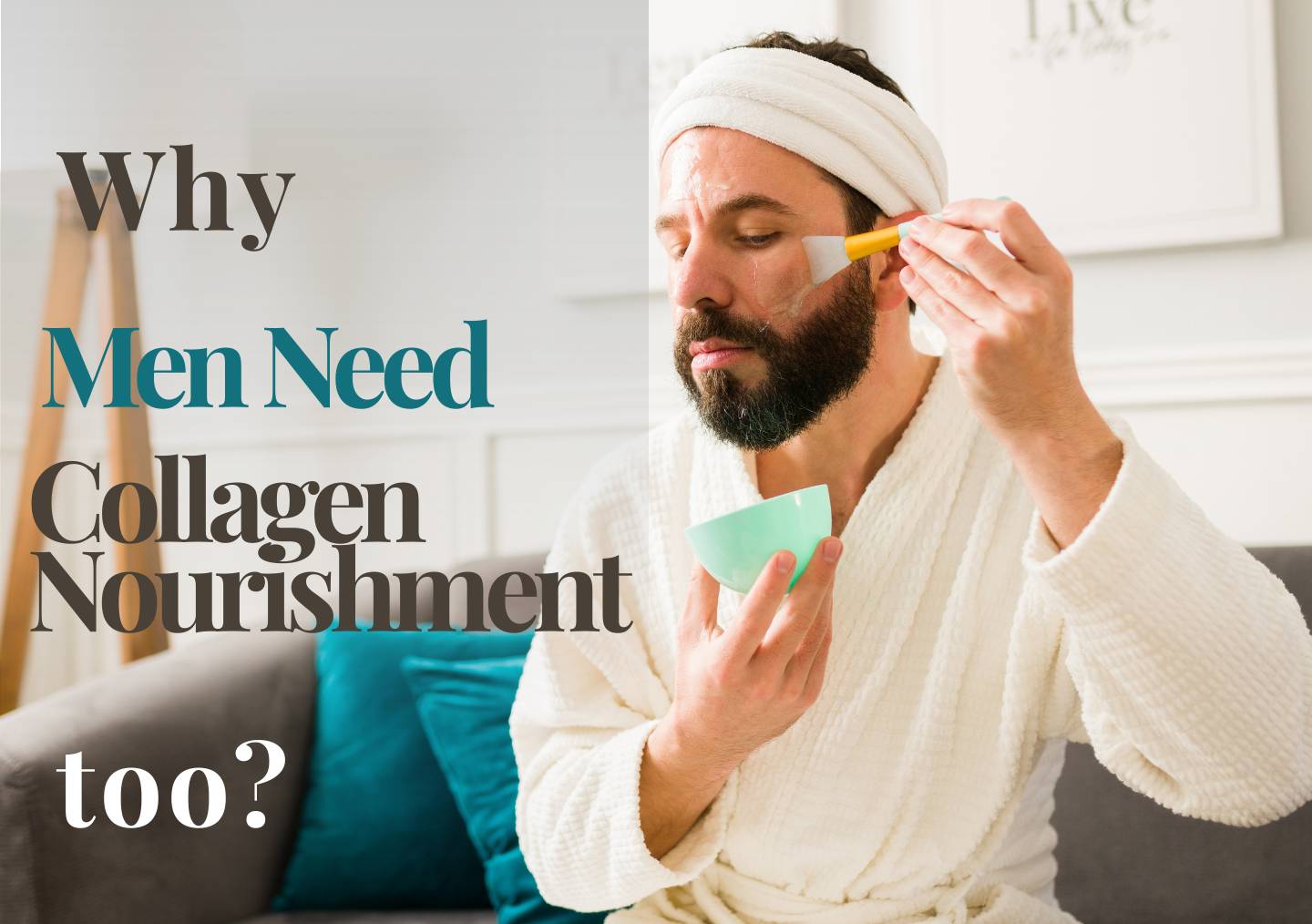
Introduction: Collagen Is Not Just a Women’s Conversation
What first comes to mind when you hear the word “collagen”? It’s linked with beauty and skincare products aimed mostly at women. For years, collagen has been advertised primarily as a concern for female consumers, while raising a random thought: do men need it or not?
The initial step is to understand that collagen isn’t a beauty trend but a kind of body protein. Whether it’s a man or a woman, collagen plays a crucial role in maintaining the structure, strength, and resilience of the skin. Collagen supports firmness, elasticity, and overall skin health, but also contributes to joint, connective tissue, and bone health.
The truth is simple: men lose collagen too.
Just because men’s skincare conversations are hyped or common, it doesn’t mean their skin is immune to aging, environmental damage, or collagen decline, or that it happens more slowly. Men unknowingly have more collagen breakdown because of lifestyle habits, maximum sun exposure, stress, and lack of skin protection or care.
Understanding why men need collagen nourishment is not about vanity. It is about understanding how the skin changes over time and what it needs to remain healthy, resilient, and strong.
What Is Collagen and Why Does It Matter?
Well, collagen is a strong protein needed in abundance in the body for overall wellness, including skin health. It’s responsible for;
- Skin firmness
- Elasticity
- Structural support
- Smooth texture
- Skin resilience
The healthy collagen level helps skin to maintain its bounce and strength. It helps effective recovery from daily stress and makes skin firm and youthful. However, collagen isn’t always the same and declines as people age. Not only accelerates the breakdown of existing collagen but also slows down the production naturally. This process affects everyone, regardless of gender.
The Myth That Men’s Skin Ages Differently
There is some truth to the idea that men’s skin differs from women’s skin.
Men generally have:
- Thicker skin
- Higher collagen density in early adulthood
- Greater natural oil production
All due to these factors, men often don’t notice the signs of aging as quickly in their young times. But having more collagen initially does not mean collagen loss never happens.
Over time, men still experience:
- Reduced elasticity
- Fine lines
- Skin laxity
- Rougher texture
- Loss of firmness
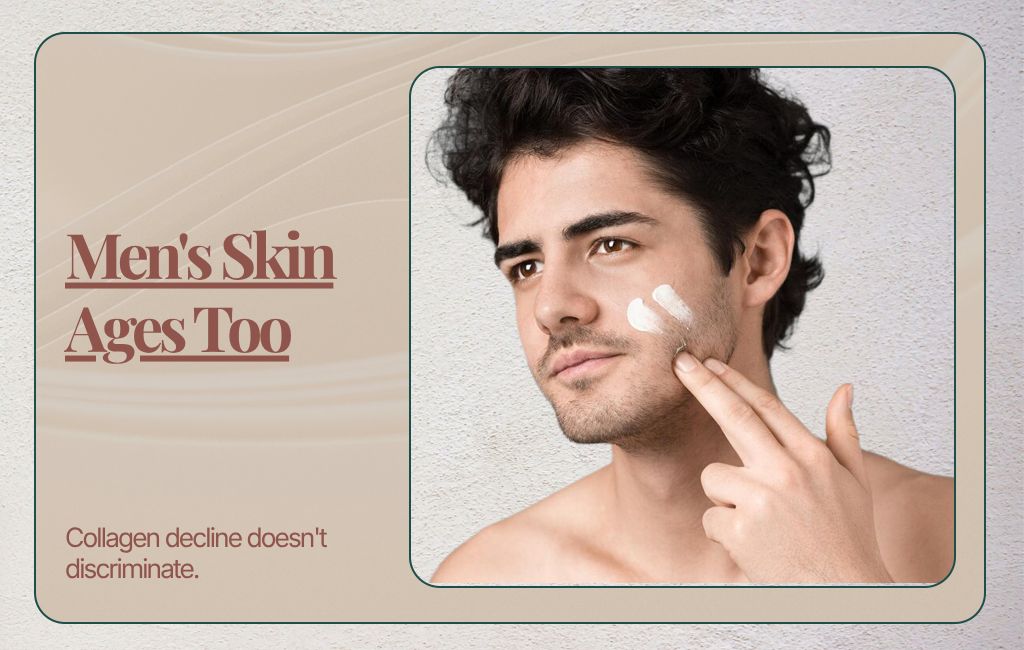
Collagen Loss Begins Earlier Than Most Men Think
The biggest myth about collagen is it only matters once visible signs appear. But reality hits different as collagen starts declining in the mid-20s. The changes are subtle at first.
Most men will not wake up one morning and suddenly notice collagen loss. Instead, the process happens quietly beneath the surface.
Skin may:
- Recover more slowly
- Feel less resilient
- Lose some natural bounce
- Show early texture changes
Why Modern Lifestyles Accelerate Collagen Breakdown?
Collagen loss is natural, and as time passes, it declines at a faster rate, and production gets slower. However, adopting certain habits speeds up the process significantly. Mostly, men have daily exposure to factors below that contribute to the speedy breakdown of collagen. These include:
- Sun exposure
- Pollution
- Smoking
- Chronic stress
- Poor sleep
- Nutritional imbalances
- Excessive alcohol consumption
Each of these factors places additional stress on the skin and accelerates the decline of collagen over time. The challenge is that most of this damage happens silently.
Sun Exposure: The Biggest Collagen Threat
This is one of the prime factors responsible for collagen damage. The UV rays from the sun break down the collagen fibres and interfere with the body’s ability to maintain healthy skin structure. Most man spend more of their time outdoors due to work, sports, commuting, and more, and sun protection is a commonly neglected part of male skincare routines.
Repeated UV exposure contributes to:
- Premature wrinkles
- Reduced elasticity
- Uneven texture
- Skin roughness
- Faster visible aging
The Hidden Impact of Pollution
The modern lifestyle exposes skin more to pollution and environmental stressors. From vehicle emissions to dust, smoke, and environmental pollutants, it develops oxidative stress on skin. Oxidative stress damages important skin structures, including collagen. Over time, pollution contributes to:
- Dullness
- Loss of elasticity
- Barrier damage
- Premature aging
Many men focus on fitness, nutrition, and physical health, while missing the impact of environmental stressors on their skin.
Why Does Oily Skin Not Protect Against Collagen Loss?
Men mostly have oilier skin and assume it’s already protected from aging and damage. This myth is linked to oil production being better for collagen health. The more sebum on skin affects and causes clogged pores.
A man can have oily skin while still experiencing:
- Collagen decline
- Loss of elasticity
- Barrier damage
- Premature aging
Collagen and Skin Elasticity
This is one of the prime noticeable signs of collagen decline. Reduced elasticity means the skin’s ability to stretch and bounce back is low. Healthy collagen helps maintain:
- Firmness
- Bounce
- Flexibility
- Structural support
As collagen declines, the skin gradually loses these qualities.
This may show up as:
- Skin looking less firm
- Fine lines becoming more noticeable
- A tired appearance
- Changes around the jawline and eye area
Why Recovery Changes With Age?
The healing and recovery of the skin from daily stress is faster when you are young. Whether it’s minor irritation, shaving-related redness, or environmental exposure—repair is efficient. Collagen production gets slower with age and makes recovery less effective over time.
Men may begin noticing:
- Increased sensitivity
- Slower healing
- More visible texture changes
- Persistent dryness
- Reduced resilience
The Connection Between Collagen and Confidence
Important to understand is that healthy skin isn’t about appearance and reflects overall wellness. Healthy skin makes people feel resilient and balanced, making them more confident in their appearance.
This does not mean pursuing unrealistic beauty standards. It means understanding that skin health contributes to how people feel about themselves and how comfortably they move through daily life. Therefore, supporting collagen is part of maintaining that long-term skin health.
Why Prevention Matters More Than Repair?
One of the most important lessons about collagen is that prevention is easier than correction. Once significant collagen loss occurs, fully restoring the original structure becomes challenging. This is why awareness matters long before visible aging becomes a concern.
Simple habits such as:
- Daily sun protection
- Staying hydrated
- Maintaining healthy sleep patterns
- Supporting the skin barrier
- Following a consistent skincare routine
All such steps help support healthier skin over time.
A New Perspective on Men’s Skincare
That earlier belief that skincare is only for women has now vanished. Today, more men are concerned about their skin wellness and love to be recognized for their skincare regimen. It’s not all core for maintaining health, resilience, and function. Men today are also understanding that collagen nourishment helps shift the focus away from appearance alone and toward long-term skin support. That is a healthier and more realistic approach to skincare for everyone.
Conclusion: Strong Skin Needs Support Too
Men have thick skin and higher collagen levels, but they are not immune to collagen decline. Factors like aging, sun exposure, pollution, stress, and lifestyle habits have a significant impact on the gradual breakdown of collagen over time. Although the effects aren’t immediate, they show up with signs such as reduced elasticity, loss of firmness, slower recovery, and visible signs of aging. Recognizing this reality is not about chasing youth. It is about understanding what healthy skin needs to remain resilient as the years pass. Because in the end, collagen nourishment is not a women’s issue or a men’s issue. It is a skin health issue. And healthy, resilient skin deserves support at every stage of life.
Keyphrases : Do men need collagen, benefits of collagen for men, signs of collagen loss in men, best men’s skincare for aging