
When it comes to visible sun damage, tanning, sunburn, and pigmentation take the first-row seats. That’s why it is easy to miss the action happening beneath the surface often. Collagen damage, something a little more concerning, occurs every time you step outside in the sun. Collagen is a naturally occurring protein that supports skin structure, elasticity, and firmness. And as UV radiation hits your skin, it affects this very foundation. Surprised? Here is a detailed breakdown of the UV rays vs collagen battle.
What Is Collagen, Its Purpose, And Importance
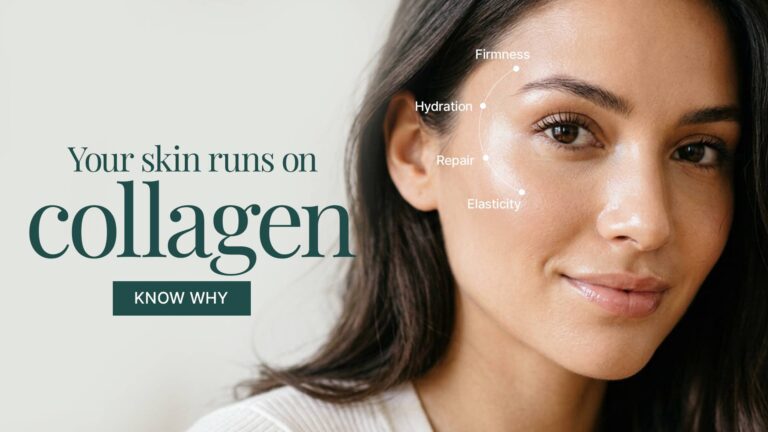
Before diving deep into the UV rays vs collagen battle, let us first understand the basics. Collagen is found in the thick middle layer of your skin, called the dermis. Arranged in a tightly packed network of fibres, a healthy level of collagen in skin ensures:
- Elasticity to help skin bounce back to original shape after being stretched
- Hydrated and plump-looking skin
- Reduced appearance of fine lines and wrinkles
- Even toned and radiant look
- Quick wound healing
However, studies show that collagen production does not work on the same level. Instead, your body starts producing about 1% less collagen every year, especially from your mid-20s. This phenomenon is called intrinsic ageing. Apart from this, external factors like UV exposure also accelerate this process.
Understanding UV Rays
UV rays coming from sunlight are divided into two major types:
- UVA Rays
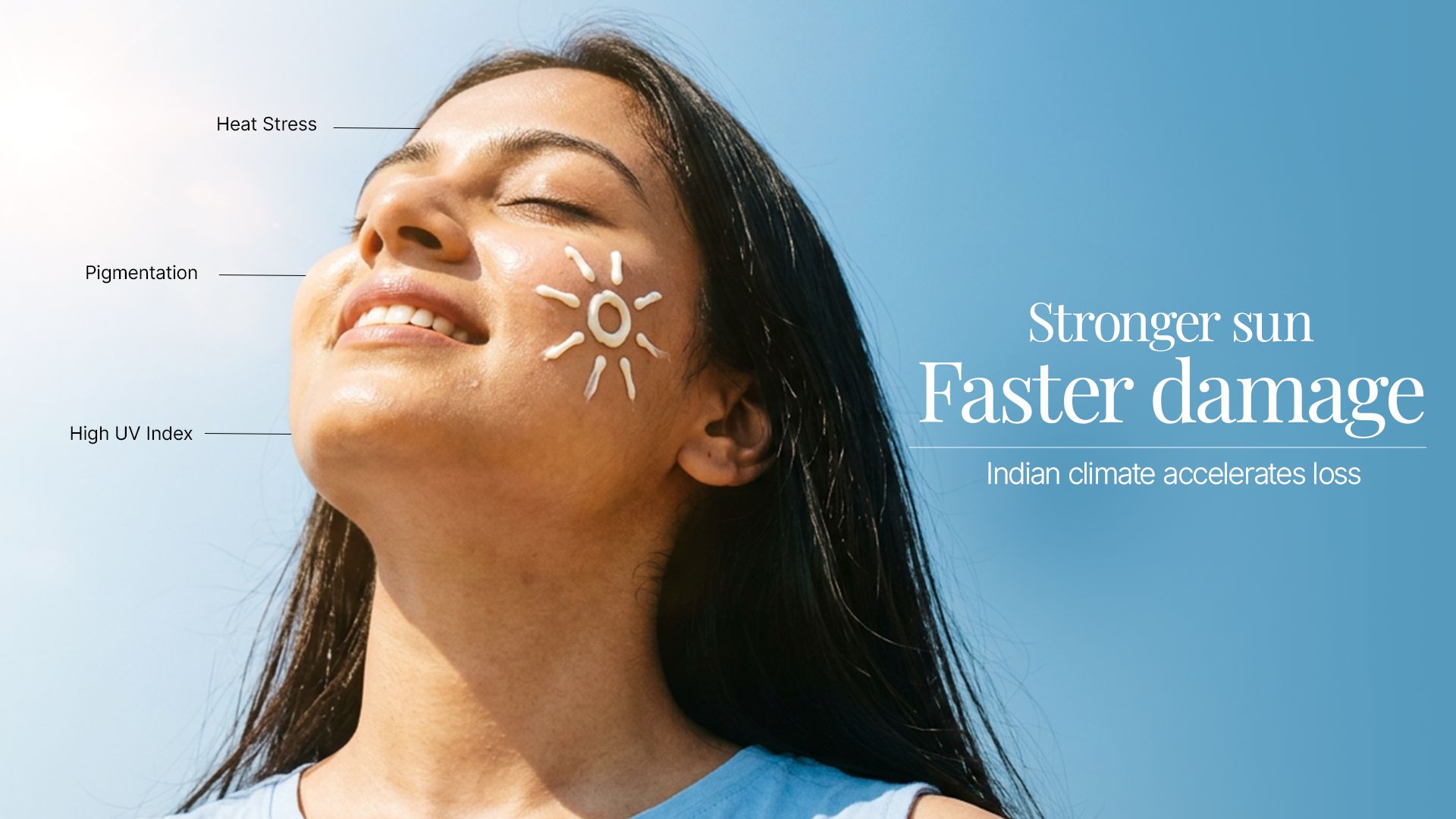
UVA rays account for about 95% of radiation that reaches the Earth’s surface. It can penetrate and cause damage to the second layer of your skin. Moreover, these rays can cause wrinkles, sunspots, oxidative stress, and photoageing. What makes them damaging for your skin is their consistency throughout the year, even when it’s cloudy outside. - UVB Rays
UVB rays are shorter in wavelength than UVA. They damage the top layer of your skin, the epidermis, and can cause redness and sunburns. Apart from inflammation, UVB rays can also cause collagen degradation.
How UV Rays Affect Collagen
As mentioned earlier, collagen gives your skin the structure, strength, and resilience. It keeps your skin looking healthy, radiant, and young. But when exposed to UV rays, the collagen gets affected through various biological mechanisms.
- UV Rays Generate Free Radicals
According to studies, UV rays can generate free radicals in your body that cause oxidative stress. These are highly reactive and unstable molecules that can cause early signs of ageing. Additionally, these free radicals can hamper the production of collagen, making your skin lose firmness and elasticity. - Activation of Collagen-Destroying Enzymes
UV rays can cause inflammation and stimulate matrix metalloproteinases (MMPs) in your body. These enzymes actively break down existing collagen fibres. Moreover, they can prevent the growth of new collagen and weaken your skin structure. - Chronic Inflammation
For many people, repeated UV exposure can cause sudden and chronic inflammation in the skin. Even if the sunburn is not visible, the underlying inflammation can cause discomfort. - Slowed Skin Renewal
Prolonged UV exposure can slow down cell turnover, a process in which new cells replace dead ones. These rays can also affect the activity of fibroblasts and cause a delay in skin repair and collagen regeneration.
Difference Between Photoageing And Chronological Ageing
Some studies suggest that about 80% of visible skin ageing is caused due to UV exposure. However, as you age, other factors like chronological ageing can also play a crucial role.
| Factor | Photoageing | Chronological Ageing |
| Cause | Caused by UV exposure | Caused by genetic ageing processes |
| Impact | Deep wrinkles and rough texture | Fine lines and dry skin |
| Scope | Limited to sun-exposed areas like face and neck | Can affect the entire body |
| Measures | Can be managed with regular sunscreen application | Unavoidable |
How To Know If Collagen Is Under Attack
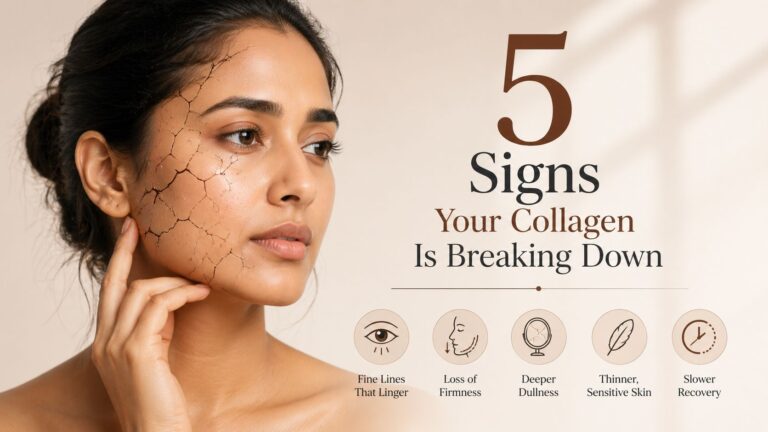
Damaged collagen is not an overnight process. Instead, it happens gradually and becomes more visible with time. Common signs of collagen under attack include:
- Uneven or patchy skin texture
- Fine lines, wrinkles, and saggy-looking skin
- Dry and rough skin
- Skin taking a long time to bounce back after being pinched or pressed
Different Ways UV Rays Hit Collagen
Many people think that occasional waterpark days or skin exposure can affect collagen levels. However, it’s more about the daily practices that create a problem in the long run.
- Stepping outside without applying sunscreen
- Sitting near windows
- Walking outdoors during peak sunlight hours
- Not reapplying sunscreen every few hours
It is worth noting that UV rays can penetrate clouds and glass and cause damage even if you are indoors. And over time, this constant exposure can accelerate collagen breakdown.
How to Protect Collagen from UV Damage
- Use broad-spectrum sunscreen to get protection from both UVA and UVB rays. Look for options with SPF 30 or higher
- Reapply your SPF every 2-3 hours to get the best protection
- Avoid stepping out in peak sunlight hours
- Wear protective clothing like a hat or a cap, full-sleeve clothes, and sunglasses
- Consume an antioxidant-rich diet to fight oxidative stress
- Use retinoids to boost collagen production
- Avoid over exfoliation to prevent your skin barrier from damage
- Use a good moisturiser to prevent transepidermal water loss (TEWL)
While it may not become visible right away, prolonged sun exposure can result in tanning, sunspots, redness, and sunburns. And it is also clear that UV rays can damage existing collagen and hamper new production. Plus, it can also weaken collagen in your skin and cause saggy skin, wrinkles, dry patches, and fine lines. But with a few simple practices like applying a broad-spectrum sunscreen every few hours, you can provide your skin with the right strength.
Frequently Asked Questions (FAQs)
UV rays can affect collagen in your skin. It can weaken their structure, strength, and your skin’s ability to produce new collagen.
UV rays are divided into two categories: UVA and UVB rays
You can boost collagen by using a broad-spectrum sunscreen every day, applying retinoid or retinol, and eating a balanced diet.
Yes, excessive sugar intake can affect collagen through glycation. This process can make existing collagen fibres less functional.
Collagen keeps your skin plump, radiant, resilient, and younger looking. It provides structure and elasticity.
Keywords : Indian Climate accelerates loss, UV radiation, UV rays vs Collagen Battle, How Sun affects Collagen, Sunscreen Protection