
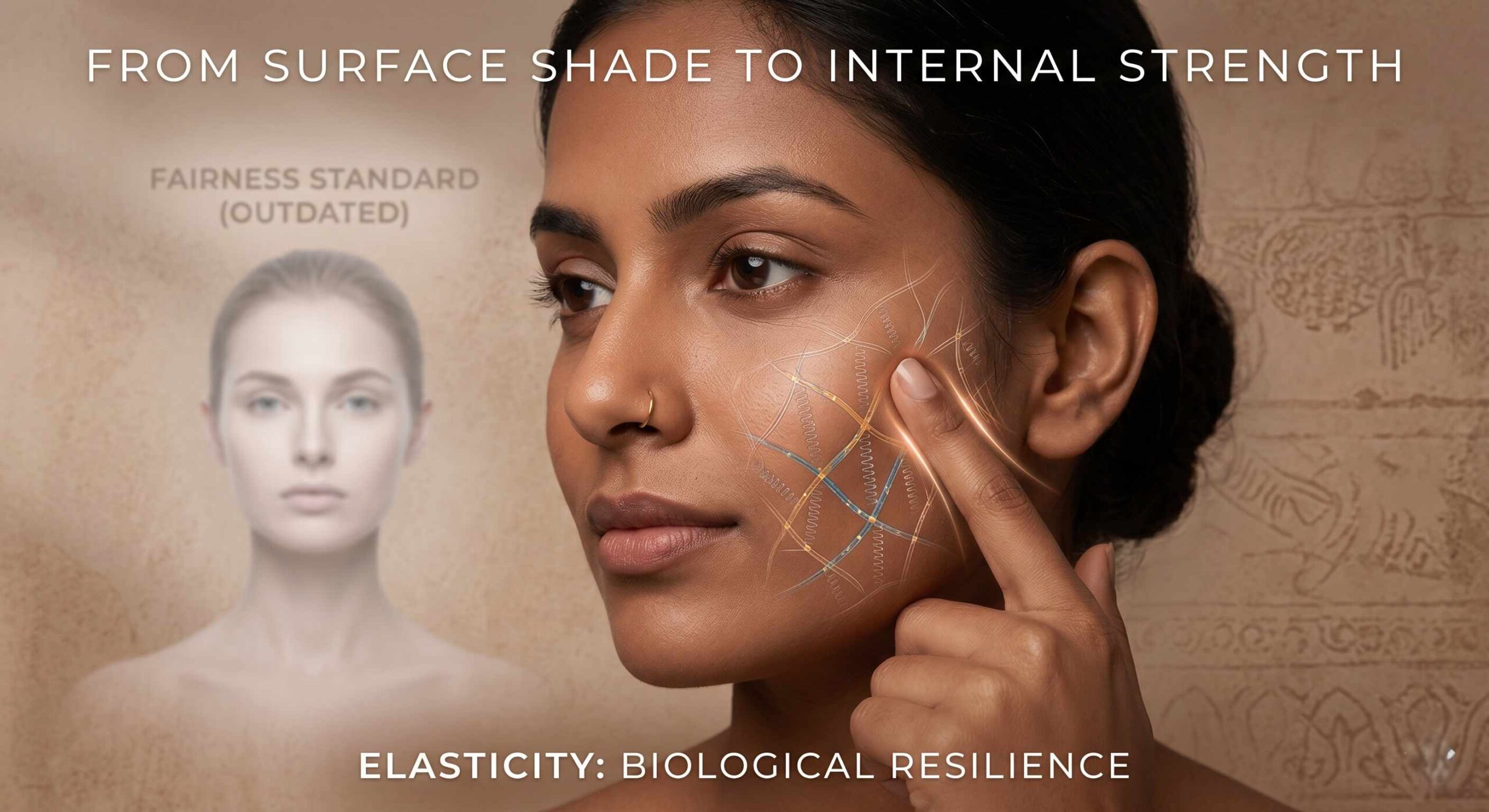
Introduction: A Shift in How We Think About Skin
For ages, beauty has been defined with a narrow lens. In fact, in many cultures, it became trapped in a mindset of fairness, serving as the default measure of attractive skin. The entire skincare category, advertising narratives, and personal aspirations were built around changing skin tone to become lighter, brighter, or even more toned.
Although this whole idea of beauty misses some fundamentals and logic. But now more people are understanding that skin isn’t just about colour, but also about its health, followed by age, genetics, and internal balance.
This whole approach is based on our founder’s thinking, which began with a simple but uncomfortable question to be asked publicly. What if we have been measuring skin the wrong way all along? That’s a slow shift from fairness to something more meaningful and biologically relevant, which is the elasticity of skin.
How the Idea Started?
The realization came with breakthroughs most people faced, and yes, of course, the observations. People in their years were more worried about becoming fairer, yet very few were thinking about the facts: whether the skin is healthy, strong, or resilient. Ideas begin with clear disconnectivity between the entire beauty and skincare promotions and what skin actually needs, like quick fixes, gimmicks or backed approaches that really work.
Understand this: two individuals with completely different skin tones cannot be the same in terms of genetics, skin health conditions, and more. One may have dull, tired, and sagging skin but still be considered acceptable by fairness standards, while others might be more nourished and have firm or glowing skin, yet still be insecure about tone-based comparisons. This contradiction made one thing obvious: fairness was not a reliable measure of skin health.
What Skin Actually Needs?
The code for skin beauty is its health, which isn’t bound or defined by shade but by its function and structure. Healthy skin holds moisture effectively, repairs itself easily, maintains natural firmness, and responds well to environmental stress. These qualities are not related to colour at all. Instead, they are deeply connected to elasticity.
Skin elasticity is defined as the skin’s ability to stretch and return to its original form. It’s responsible for skin firmness, bounce and youthful appearance. It’s even more pronounced with age, which makes skin sag and look dull, so it’s a more precise quality than fairness.
Why Fairness Is a Limited Goal?
Although the fairness standard for skin is limited to surface appearance. Skin tone, however, is determined by melanin, a natural protective pigment beneath the skin layers, which has very little to do with skin health. A lighter skin tone does not automatically mean healthy skin, just as a deeper skin tone does not mean unhealthy skin.
Talking about skin health, it lies in its upper surface, followed by hydration level, collagen strength, barrier function, and resilience. People with fairness-based thinking aren’t even aware of the skincare needed for skin health, as it creates a chart for comparing care with health. Over time, this builds insecurity instead of awareness.
Understanding Elasticity in Real Terms
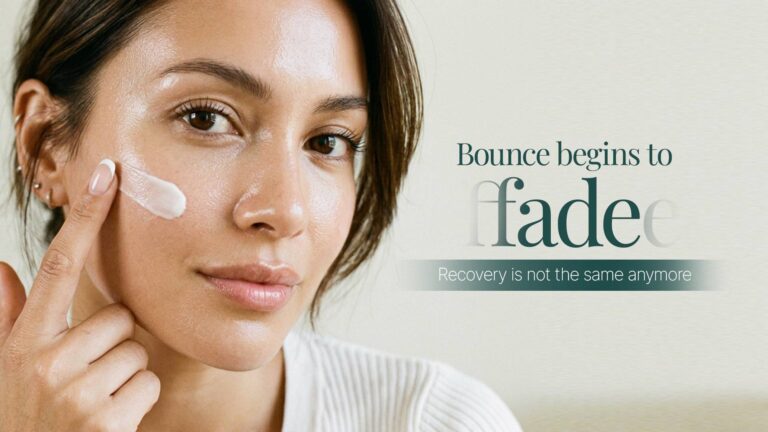
Actually, elasticity is how your skin behaves over time at different ages. When you are young, it’s firm, healthy and stretches, even looks smoother with natural bounce. In years when elasticity declines, facial structure can even lose its firmness and overall appearance, making it look tired and dull.
It’s a process that doesn’t happen overnight or suddenly but begins gradually. In fact, it is silent in the mid-20s and becomes visible as one age. Skin elasticity isn’t about appearance; it’s about how skin functions at the biological level.
This process does not happen suddenly. It begins gradually, often in the mid-20s, and becomes more visible with time. Unlike fairness, elasticity is not about appearance alone but about how skin functions at a biological level.
The Role of Collagen
Typically, elasticity is associated with collagen, the main structural protein in the skin, which works within the internal framework. It’s responsible for keeping skin smoother, firmer, and more resilient.
With age, collagen production naturally declines, which impacts firmness and slows repair, leading to visible signs of aging such as fine lines and wrinkles.
Although external factors, such as sun exposure, stress, pollution, poor sleep, and nutritional imbalance, can also speed up this process. It is important to understand skin elasticity rather than focusing on fairness, as external skin tone isn’t much more important than understanding how skin ages biologically while still healthy.
Why This Shift Matters Today?
The modern lifestyle comes with constant pressure on the skin. Prolonged sun exposure, irregular sleep, environmental damage from pollution, stress and dietary habits all contribute to faster skin fatigue. So, people focusing on fairness feel quite outdated, as they’re away from the facts about addressing real skin challenges in daily life.
Elasticity, on the other hand, directly relates to resilience. It is about helping skin stay strong and functional amid everyday stressors.
The Emotional Impact of Skin Standards
Generally, fairness-based beauty standards are shallow and created on comparison-driven insecurity. People feel less confident and more stressed about discussions of skin tone, as even some knowledge of ideal skin tones is linked to skin health. This pace of chasing external beauty becomes ideal, even worsening skin elasticity, with the use of random products and gimmick trends. This shift changes how people relate to their skin. Instead of trying to change appearance, the focus moves toward understanding and improving skin health.
A New Brand Philosophy
Talking sense and deep from a brand perspective matters as it’s not just philosophy but ideology that
changes everything. The core is no longer promising a visible transformation in skin colour or tone,
making the surface brighter. Rather aims to support skin structure, improve hydration, strengthen natural repair and maintain long-term resilience. This is a shift from short-term visual results to long-term biological health. It is also more honest because skin does not change instantly; it responds slowly and consistently to care.
Redefining Beauty Standards
Picking skin health, like elasticity, over fairness is even a cultural shift, as decades ago, the beauty standard was based solely on a brighter or fairer skin tone. This now opens the door to a more inclusive, deeper understanding of skin health. Under this perspective, beauty is not limited to a shade. It exists across all skin tones. What matters is not how light or dark the skin is, but how firm, healthy, and alive it feels.
The Final Verdict: A New Way to Understand Skin
Today, in a fast-paced world where people are short on time and looking for quick fixes, it is important to choose products that promote healthy skin, not marketing gimmicks. Fairness has been trapped for decades within appearance, while elasticity is more core to skin function. Creating a comparison isn’t precise, while creating awareness is worthwhile.
In a world of constant exposure to stress, pollution, and aging, it is important to understand that the core of skin health lies within, not on the surface. It’s not a shift to reject beauty standards but to kind of objectify beauty to redefine a way to glow skin naturally while making it healthy at the same time. In the end, healthy skin is not about becoming lighter or darker. It is about staying firm, resilient, and alive. That is what elasticity represents, and that is the foundation of this philosophy.
FAQs (Frequently Asked Question)
It means shifting focus from changing skin tone to improving skin health. Elasticity refers to how firm, strong, and resilient the skin is, instead of how light or dark it looks.
Fairness is limited because it only focuses on skin colour, which is determined by melanin and not skin health. It ignores important factors like hydration, collagen, and overall skin function.
Skin elasticity is the ability of skin to stretch and return to its original shape. It is important because it reflects how healthy, firm, and youthful the skin is at a biological level.
Collagen is the main structural protein in skin that supports firmness and resilience. As collagen decreases with age and external factors, skin loses elasticity and starts showing signs of aging like fine lines and wrinkles.
Modern lifestyles expose skin to stress, pollution, poor sleep, and environmental damage. In this context, focusing on elasticity helps address real skin health needs instead of surface-level appearance concerns like fairness.
Keywords : elasticity of skin, redefining beauty standards, how skin ages biologically, slowing of collagen production, long term skin resilience