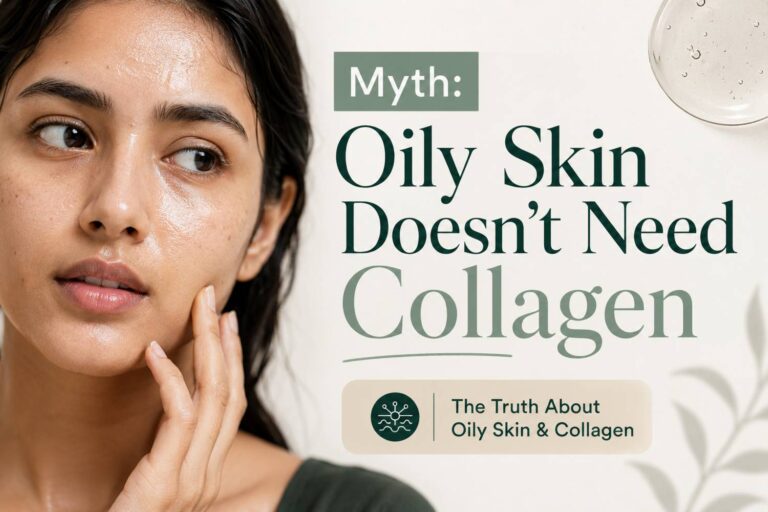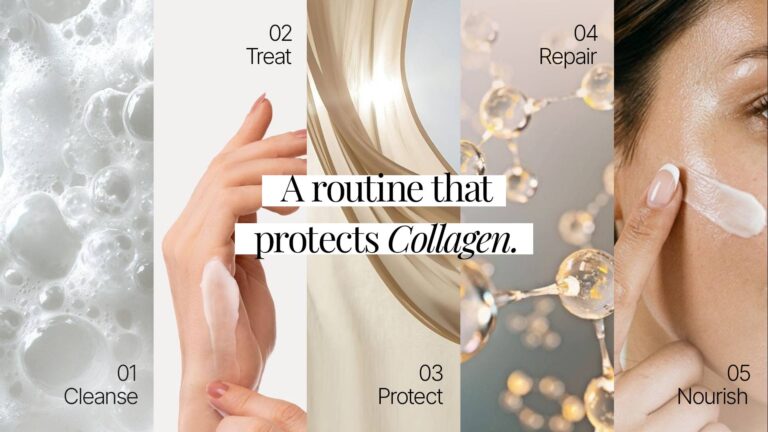


Is it possible to boost collagen using the skincare products, or is it just a marketing gimmick? As you walk into any store or scroll through beauty shopping apps, you’re going to find a plethora of products that’ll have “collagen” written on them. The shelves are loaded with collagen-boosting serums, Collagen creams, Collagen-peptide supplements, Collagen-infused sheet masks and whatnot. We’re sure you’ve been lured by the attractive packaging and compelling promises.
But have you ever wondered in the beauty aisle: how can any skincare product boost collagen that the skin is already producing in the dermis (the second layer of the skin)? In the article below, we shall bust some collagen-related myths and actual facts that’ll make you understand what the science actually supports — and what it does not.
First Understand: What Is Collagen and Why Does It Matter?
Collagen is the protein that is found in abundance in the human body, specifically in the skin. Under the epidermis, collagen forms a dense, interwoven structure in the dermis that helps keep skin plump, firm, and structurally resilient. In simple words, it’s the spring of the mattress that gives your skin a healthy and radiant look. When the springs are tightly coiled and dense, the surface (your skin) appears smooth and firm; as the coil weakens, the surface begins to sag and form creases.
From your birth till your 20s, collagen is produced in abundance, and from your mid-twenties onward, the body’s tendency to produce collagen depletes by approximately 1% each passing year. By the time people hit their forties, the signs of ageing become more visible: finer lines, loss of elasticity, softening of the jawline, and dullness.
Just in case you are negligent about UV protection, sun exposure accelerates the ageing process drastically — UV rays penetrate the epidermis to activate enzymes called matrix metalloproteinases (MMPs), which then actively break down the existing collagen in your dermis. Other collagen-depleting factors are high sugar intake, smoking, and chronic stress, which act in different ways to hamper your collagen cycle.
Now that you’ve understood the collagen cycle, let’s dive into the main query — whether skincare products claiming to restore collagen can actually deliver?
Collagen Creams, Collagen Serums: Find the Hard Truth
Understand this first:: collagen molecules are too large and cannot easily penetrate the epidermis. Why? Keep reading to better understand it.
The biological reality — Epidermis is a remarkable gatekeeper that blocks the large molecules from penetrating deeper into the skin. The collagen molecule, being one of them, is not absorbed via the transdermal route and simply rests on the surface, providing only temporary moisturisation. Therefore, applying collagen to your skin does not increase the collagen beneath it.
Collagen creams are not useless — they are a well-formulated product that contains hydrolysed collagen fragments that can hydrate your skin and provide a temporary plumping effect. This is completely a cosmetic mechanism, not a structural rebuilding foundation.
Collagen Peptides: Interesting and More Honest Story
Collagen peptides are short-chain amino acids that are derived from hydrolysed collagen. These are comparatively smaller than the whole collagen molecules and can penetrate and stimulate collagen production when used in both topical formulations and oral supplements.
Topical Application of Collagen Peptides
In topical collagen skincare products, collagen peptides can signal peptides such as palmitoyl pentapeptide (Matrixyl), which can communicate with fibroblasts to stimulate collagen production. In simple words, these peptides send a message to skin cells that says, “make more collagen.” The early studies show that if you use well-formulated peptide serums for about 3-6months, you will notice measurable increases in your skin’s collagen density.
Collagen peptides are not marketing drama; it is a slower, more subtle process that is real and best for people who can’t tolerate stronger actives like retinoids (which act faster than collagen peptides).
Oral Intake of Collagen Peptide
Hydrolysed collagen peptides can be taken daily as oral supplements and have shown promising results in overall skin health. A certain dose of hydrolysed peptides needs to be taken for about eight to twelve weeks to see visible results. These hydrolysed peptides stimulate fibroblast activity in the gut, which signals the body to produce more collagen. However, these supplements cannot replace topical actives or sun protection.
Note: Oral supplements are to be taken under the doctor’s supervision. Also, results may vary based on an individual’s gut absorption, baseline collagen levels and supplement quality.
The Ingredients That Actually Stimulate Collagen Production
In addition to collagen peptides, there are other active ingredients that can effectively stimulate the skin’s own collagen-producing machinery.
- Retinoids: the gold standard. Retinoids, when applied topically, can directly up-regulate collagen gene expression. It also inhibits the MMPs, which are the main culprits in collagen breakdown. The consistent use of retinoids can immensely increase dermal collagen density. All you have to do is incorporate retinoids into your skincare regimen and be patient to see meaningful structural change.
- Vitamin C (L-Ascorbic Acid): Vitamin C serum can result in collagen synthesis when applied topically. A well-formulated Vitamin C serum provides antioxidant protection against UV rays when used alongside SPF.
- Niacinamide (Vitamin B3): Niacinamide directly stimulates collagen synthesis, but it also helps reduce inflammation, which can degrade existing collagen. Niacinamide helps strengthen the skin barrier and improves the overall cellular repair system, promoting collagen production. It is gentle and can be paired with both retinoids and Vitamin C.
- Chemical Exfoliants (AHAs and BHAs): AHAs and BHAs help accelerate surface cell turnover by signalling the dermis to produce new collagen. Their exfoliating action can initiate a mild wound response, triggering and stimulating fibroblast activity to build collagen.
- In-clinic procedures: Clinical procedures like microneedling and radiofrequency help stimulate the production of new collagen during the healing process, which can prompt the skin to rebuild its dermal structure with new, tighter collagen fibres.
So, Can Skincare Really Boost Collagen?
Absolutely, yes — we’ve listed three important qualifications below:
Firstly, it totally depends on what is in the product. Collagen peptides, retinoids, and stabilised Vitamin C not only have strong evidence behind them, but, with consistent use, they can effectively stimulate collagen production. Always read your ingredient list.
Secondly, it’s important to understand that no topical skincare product can replicate the speed of professional treatments. Skincare can prevent and gradually repair the loss, but cannot rebuild the structural loss that has already occurred.
Third, the only way to effectively preserve collagen is to use a broad-spectrum SPF daily. We often ignore the long-term damage caused by UV radiation until we start to notice visible signs of ageing. You need to understand that, whenever you apply sunscreen in the morning, you are preserving collagen that no serum or any other skincare product can restore. Therefore, sun protection is not simply a skincare step; it is a long-term investment that compounds quietly to give you healthier, younger-looking skin.
Notice More Ingredients, Spend Less on Promises
As long as the beauty industry continues to profit, it will keep selling collagen skincare products. But now that you’ve understood the entire gimmick by the end of this article, it’s entirely your decision where you wish to invest your money. We would still insist that you check for suitable ingredients that can actually stimulate collagen. Also, build a skincare routine where SPF is the bare minimum step. Your skin is barely noticing the luxury bottles; instead, it’s only looking for ingredients that support collagen production. So, choose your skincare wisely.
Keywords : Collagen Importance, Collagen Skincare Products, Collagen Serums, Collagen Cream,