

Introduction: Summer Does More Than Tan Your Skin
The intensity and scorching heat of Indian summers can leave anyone exhausted. The sun stays harsher for longer hours, which makes the heat feel heavier. Many people believe that summer skincare isn’t all about avoiding tanning or controlling oiliness. However, it has deeper issues that often go unnoticed: collagen damage.
While temporary effects such as sweating, dullness, or sunburn on the surface are visible, the skin experiences much more beneath the surface. High temperatures, UV exposure, dehydration, pollution, and constant heat stress silently affect collagen levels over time.
That’s where many people notice that skin looks tiring, uneven, and aged after long summers, even after following a healthy skincare routine. The issue isn’t seasonal discomfort. The problem is that Indian summers create the perfect environment for faster collagen breakdown. And when collagen is lost, it is much harder to reverse.
Understanding Why Collagen Matters
After extensive health research, collagen has been recognized for its role in skin structure and health. It’s the main structural protein in the skin, providing support to keep it firm, smooth, and elastic. The healthy collagen levels in the skin maintain bounce, strength, and resilience.
Collagen declines silently, and when it begins, it slowly becomes visible. The skin starts losing its elasticity and firmness. It makes fine lines appear deeper, changes the texture, and reduces the skin’s natural glow. This process naturally happens with age, but environmental stress can accelerate it significantly. Indian summers are among the biggest environmental stressors on the skin.
The Biggest Threat: Harsh UV Exposure
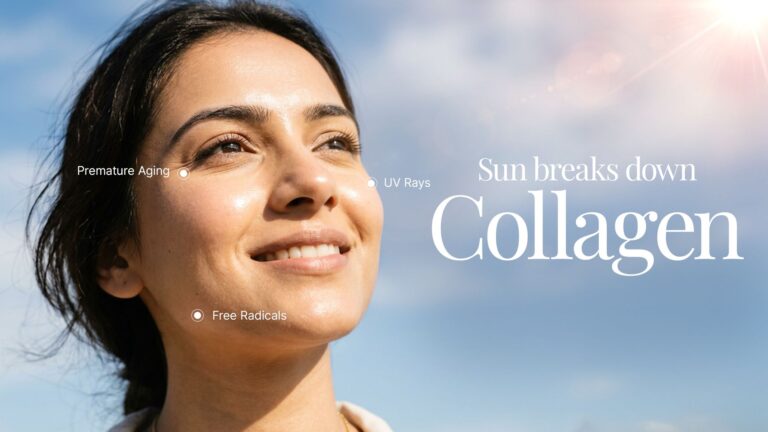
Indian summers damage collagen aggressively due to harmful ultraviolet radiation from the sun. UV exposure deeply penetrates the skin and increases oxidative stress. This leads to weakened collagen fibres over time.
The prolonged exposure to UV rays also activates enzymes that directly break down the existing collagen in the skin. This process, known as photoaging, is a leading cause of premature skin aging.
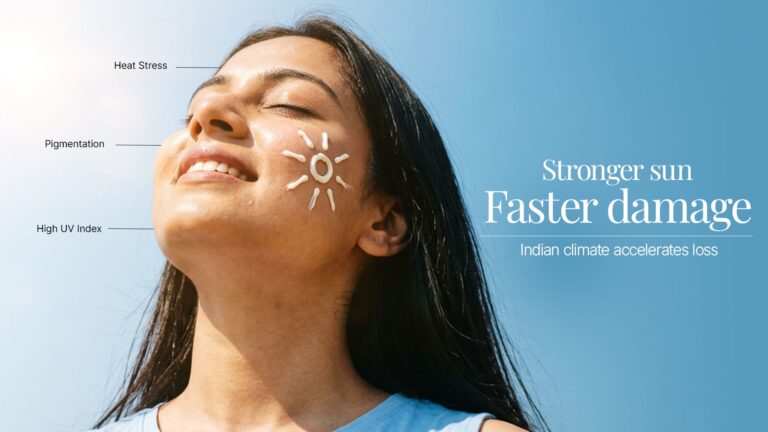
UV levels in the summer are unexpectedly high, especially during the peak afternoons. Daily exposure while commuting, during outdoor activities, or even through windows can also affect the skin’s structure.
The damage is cumulative. You may not notice it immediately, but years of repeated exposure eventually show up as:
- Early fine lines
- Uneven texture
- Loss of firmness
- Increased pigmentation
- Skin looking thinner or tired
This is why sun exposure affects more than just skin tone.
Heat Stress and Inflammation
The extreme heat of Indian summers affects skin health in multiple ways: constant UV exposure creates ongoing heat stress, which can lead to inflammation. This weakens the skin barrier and increases oxidative stress which contributes to faster collagen degradation.
Inflammation in the skin gets worse in Indian scorching summers that aren’t just hot but unbearable. It’s all because it combines with humidity, sweating, pollution, and dehydration, creating additional pressure on the skin. Your skin is not simply “feeling hot.” It is continuously working harder to protect itself.
Dehydration Makes Collagen Less Resilient
Hydration plays a crucial role in collagen functioning. Collagen works best when the skin stays properly hydrated and supported. Excessive heat and sweating increase water loss from the body and the skin. This makes it dehydrated, therefore loosen plumpness & elasticity. Poorly hydrated skin
has visible signs like wrinkles and fine lines, and weakens the skin barrier.
Therefore, it creates a cycle in which the skin becomes more vulnerable to environmental damage, accelerating collagen breakdown. In that quick fix for skin hydration, most people unknowingly focus only on drinking water in the summer.
Skin hydration depends on other factors too, such as barrier health and moisture retention. Therefore, a skin without proper support struggles to maintain resilience in extreme scorching conditions and other environmental stresses.
Pollution and Summer Together Create More Damage
During peak summers, people, especially in urban areas, often experience high pollution levels, which, when combined with strong UV exposure, can cause greater damage. This type of environmental stress generates free radicals and disrupts the skin’s natural defence system.
All these attacks on collagen and elastin damage the fibres; therefore, the skin loses firmness and elasticity. When pollution and sunlight interact, oxidative stress increases significantly. This is one reason urban skin often ages faster, especially in hot climates.
People living in metropolitan areas may notice:
- Increased dullness
- Uneven texture
- Faster tanning
- Persistent dryness despite humidity
- Premature fine lines
Why Oily Skin Also Suffers in Summer?
This is one of the common myths that oily skin is naturally protected during the summertime. Although oily skin appears less dry, it doesn’t protect collagen but increases sebum production.
Therefore, letting people over-cleanse or using harsh and chemical-based products to feel fresh. It’s an over-cleansing step that damages the skin barrier, leading to irritation and water loss.
Once the skin barrier weakens, it makes it more vulnerable to UV damage, dehydration, and inflammation. So even though oily skin may feel “hydrated,” it can still experience significant collagen stress during summer.
The Hidden Impact of Air Conditioning
Maybe an overlooked factor, but never to miss, as constant exposure to air conditioning worsens the skin condition. Many repeatedly move between outdoor heat and cold indoor environments all day long. While air conditioning feels relieving, it also dries out the skin.
That constant shift between extreme heat and dry indoor air disrupts the skin’s health and its barrier function. It even contributes to dehydration. This reduces the skin’s ability to retain moisture and, in turn, affects collagen health. This is why summer skin often feels both oily and dehydrated at the same time.
Summer Lifestyle Habits That Speed Up Collagen Breakdown
Apart from the Indian heat wave, daily habits also impact skin health and collagen breakdown.
Poor sleep, irregular hydration, increased intake of sugary drinks, stress, and poor nutrition can influence collagen production.
People in the summer tend to consume more processed foods and cooling drinks, thereby neglecting nutrients essential for skin repair and health. Simultaneously, sleep quality in the summer gets reduced due to heat discomfort, which affects the body’s and skin’s natural repair processes. All of these small lifestyle disruptions slowly add up and influence how the skin ages.
Why Prevention Matters More Than Repair?
As collagen breakdown happens silently, by the time people notice visible signs like sagging, deeper lines, or wrinkles, the damage is done. That’s why prevention plays a crucial role throughout all seasons, including summer, to reverse or restore skin health.
Do you know that protecting collagen is easier than rebuilding it? Adopting simple habits such as sun protection, managing hydration, using non-harsh skincare, and supporting the skin barrier makes a huge difference over time. A summer skincare regimen should not be centred on looking fresh but focused on preserving skin structure in the long term.
Conclusion: Indian Summers Age Skin Quietly
The truth is, Indian summers are the worst enemy for skin and collagen, as they combine many forms of stress at once. From UV exposure to dehydration, pollution, heat, inflammation, and barrier disruptions, all cause serious, permanent damage that builds silently.
Those noticeable signs, like dullness or tanning, but underneath the skin layers, collagen is silently damaged. Over time, skin shows signs of premature aging, reduced elasticity, fine lines, and a tired appearance. Although understanding these changes makes skin healthier, it is not for survival in the summer, but rather to preserve its resilience and strength for years.
Keyphrases : Collagen breakdown from sun, Effects of Summer on Collagen, UV damage and collagen degradation, Does inflammation from heat destroy collagen?