
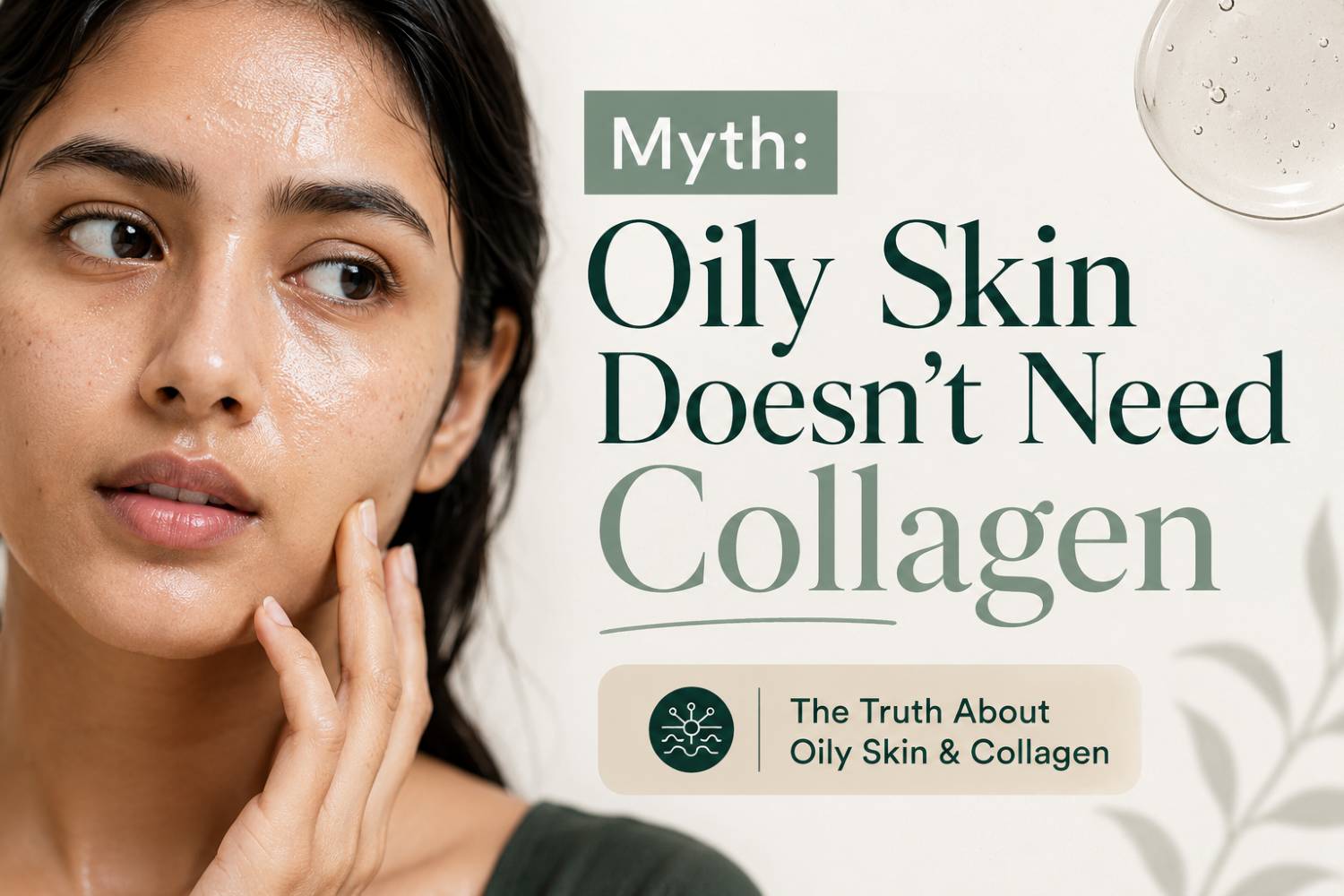
Introduction: One of the Most Misunderstood Skin Myths
For years, oily skin has been misunderstood compared to other skin types. In fact, people with oily skin are called fortunate or lucky because of the misconception of aging more slowly. Oil skin looks shinier and thicker, so the assumption is to stay young forever and doesn’t need much support or care like dry or mature skin.
This myth is false, as oily skin doesn’t even need collagen support. Although the reality hits differently. Oily skin actually looks shiny but still faces the same skin concerns as declining collagen, environmental stress, dehydration, aging, and more. The presence of natural oil in skin may be high, but this doesn’t mean it protects collagen from breaking over time.
People with oily skin unknowingly damage their collagen faster while focusing on oil control rather than just maintaining skin health. Understanding this myth changes the way oily skin should actually be treated.
What Collagen Actually Does for Skin?
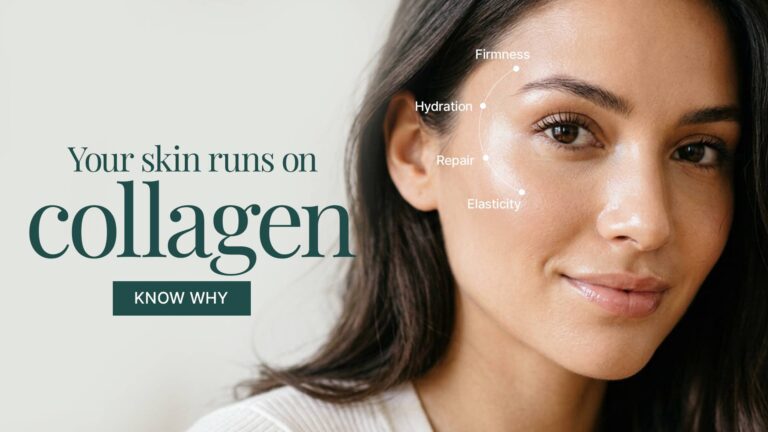
Collagen is the main structural protein that is responsible for keeping skin firm, elastic, and resilient.
Thus, support the skin surface underneath. The healthy collagen helps in maintaining.
- Skin firmness
- Elasticity
- Smooth texture
- Bounce and flexibility
- Overall skin strength
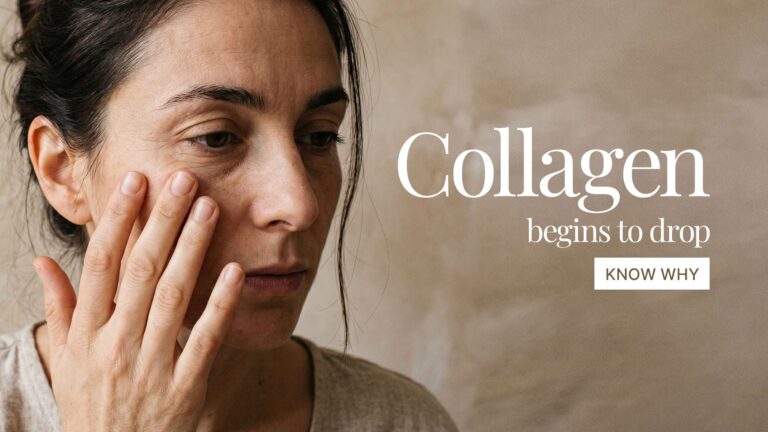
As collagen naturally declines with age, the skin slowly begins losing these qualities.
This process happens in all skin types:
- Oily skin
- Dry skin
- Combination skin
- Sensitive skin
Collagen decline is a biological process, not something determined by whether your skin produces more oil.
Why do people think oily skin ages more slowly?
The misconception is quite common as oily skin looks younger and shinier. The extreme natural oil production makes skin appear as;
- Shinier
- Fuller
- More hydrated on the surface
- Slightly plumper temporarily
This eventually softens the appearance of aging signs like fine lines earlier in life than dry skin. However, there is a significant difference between oil and collagen, as oil affects the skin surface and collagen impacts the skin structure under layers. Having excess oil does not mean the internal support system is protected.
Oil Is Not the Same as Hydration
Among many misconceptions, another is that people get confused between oily and hydrated skin.
Understand this;
Oily skin produces more sebum, and it’s not water, so it can’t replace hydration. In fact, oily skin can often become dehydrated without people realizing it. Therefore, it creates confusion about whether the skin is greasy on the surface but lacks moisture or is extremely hydrated. The reality is that oily skin does lack proper hydration internally.
When dehydration happens:
- Elasticity reduces
- Fine lines become more visible
- Barrier function weakens
- Skin becomes more reactive
- Collagen support decreases
Collagen Decline Happens in Oily Skin Too
Collagen is naturally produced but starts slowing down silently in the mid-20s in all skin types. Over time, oil skin also experiences;
- Loss of firmness
- Reduced elasticity
- Enlarged pores are becoming more noticeable
- Uneven texture
- Fine lines and sagging
The difference is that oily skin may show these changes differently.
Instead of obvious dryness, oily skin often develops:
- Heavy-looking texture
- Enlarged pores due to loss of elasticity
- Skin laxity around the cheeks and jawline
- Persistent dullness despite oiliness
Why Oily Skin Often Experiences Barrier Damage?
People with oily skin struggle a lot to use aggressive ways to control oil production. This usually includes;
- Over-cleansing
- Harsh scrubs
- Strong alcohol-based products
- Excessive exfoliation
- Drying treatments
While these approaches may temporarily reduce shine, they often damage the skin barrier over time.
A weakened barrier increases:
- Inflammation
- Water loss
- Sensitivity
- Oxidative stress
All these factors indirectly contribute to faster collagen breakdown.
Pollution and Oily Skin
You must be thinking oily skin doesn’t let any direct particle or pollution penetrate into the skin. That’s not true; pollution particles tend to stick to the skin surface more easily on excessively oily skin. Therefore, there is an increase in oxidative stress and inflammation when the skin isn’t clean properly and supported with barrier-focused care.
Over time, pollution-related oxidative stress damages collagen and elastin fibres. This contributes to:
- Uneven texture
- Loss of elasticity
- Persistent dullness
- Premature aging
Enlarged Pores and Collagen Loss
Oily skin has enlarged pores; therefore, it needs more collagen support. Pores themselves do not physically “open” or “close,” but loss of elasticity around the pore structure makes them appear larger over time.
When collagen weakens:
- Skin loses firmness around pores
- Pore walls become less supported
- Texture appears rougher and uneven
Why Oily Skin Can Still Become Sensitive with Age?
Among many myths, another belief is that oily skin stays stronger for years. Although with the same pollution and environmental stressors, poor skin health impacts weaken the barrier too, like other skin types. Therefore, there is a decline in collagen.
People may suddenly notice:
- Redness
- Irritation
- Breakouts triggered more easily
- Difficulty tolerating products
- A combination of oiliness and dehydration
The Emotional Side of the Myth
People believe that oily skin doesn’t age. The fact is people ignore the hydration, barrier repair, collagen support as focused on managing or protecting oiliness of the skin. Then, when visible changes appear later, they feel sudden and unexpected.
Skin may begin:
- Losing firmness quickly
- Developing deeper texture issues
- Looking tired despite oiliness
- Showing elasticity changes around the eyes and jawline
What Oily Skin Actually Needs?
Firstly, understand this—oily skin doesn’t need any aggressive or harsh treatment. But need a more balanced skincare regimen. Healthy oily skin is only achieved with the right routine that focuses on;
Oily skin does not need harsh treatment. It needs balance.
- Gentle cleansing
- Maintaining hydration
- Supporting the barrier
- Protecting against UV damage
- Reducing inflammation
- Supporting collagen over time
The Final Verdict:
Maybe the oily skin looks naturally shinier and healthier, but actually, it’s all because it produces more sebum than normal. This doesn’t mean it protects skin from timely collagen decline. Over time, oily skin does experience concerns like a weaker skin barrier, loss of elasticity, enlarged pores, and visible signs of aging. It is important to understand that oily skin needs treatment and care too, not only to control sebum production but also to make skin hydrated and collagen supported. Because in the end, healthy skin is not defined by how oily it looks. It is defined by how strong, resilient, and balanced it remains over time.
Keyphrases : does oily skin need collagen, why does oily skin look younger, oily but dehydrated skin signs, does oily skin age slower