

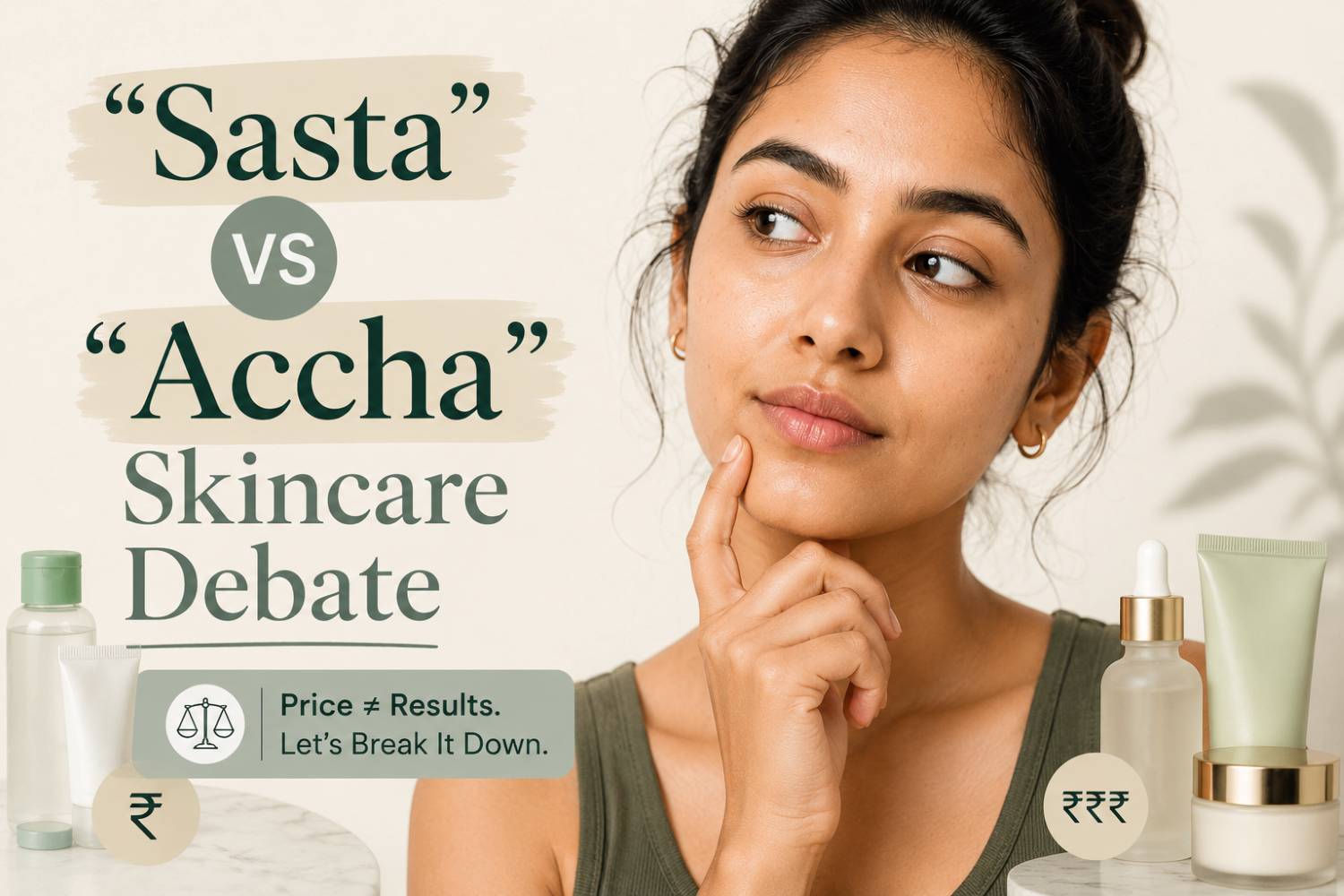
Introduction: Why This Debate Exists Everywhere
Skincare debates are no longer a normalized conversation today. It’s more on “Sasta” or “Accha”. That simply means, people constantly compare for the affordable products, keeping quality high and premium. Most people believe that expensive skincare is worth it, but few know it’s mostly a marketing gimmick. However, some believe that cheap ones won’t be good at delivering the long-term results.
In this firing discussion, no one wins, but gets more confused as the skincare market is more than we think. Each shelf, online store and social media feed is filled with a range of products that claim to have glowing skin, anti-ageing benefits, collagen support, hydration and instant brightness. However, the cost may vary; many still cost a hundred bucks, while others cost thousands.
Naturally, people start asking:
Does expensive always mean better?
Can affordable skincare still work?
Are people paying for quality or just branding?
Despite all, the facts show that skincare is more complicated than cheap versus expensive. Good skincare isn’t bound by price labels but only by formulations. Extremely low-cost skincare products even raised questions on their ingredients, formulation quality, testing standards and more. This is why the “sasta” versus “accha” skincare debate matters so much today.
Why is Cheap Skincare Becoming So Popular?
Do you know that cost-friendly skincare has a massive market and is easily accessible for consumers? People easily get products in range, buy regularly and repetitively without any financial pressure on their pockets.
In countries like India, skincare affordability is strongly influenced by purchasing decisions, marketing gimmicks, social media endorsements and more. A low-cost product that promises fairness, glow, acne removal, or anti-aging becomes attractive immediately because it feels like an easy solution.
Those impractical yet social media-accelerated trends make things viral that don’t even have anything healthy for the skin. Even influencer marketing makes people pressured unknowingly to try out quick skincare risks on trending products.
A kind of psychological factor plays a huge role in involving people in products that aren’t worth it, but are a waste. People naturally enjoy feeling smart about saving money. If a cheaper product appears to give similar results temporarily, it feels like a better deal.
But skincare is not always about what works fastest. It is often about what works safely and consistently over time.
The Problem With “Instant Result” Skincare
Most of the low-budget skincare products actually focus on visible short-term results and quick fixes.
For example:
- Instant brightness
- Quick fairness
- Temporary smoothness
- Oil-free appearance
- Fast exfoliation
These mentioned effects look impressive, but aren’t always supporting the actual skin health underneath. Some brands create products that give temporary changes but aggressively strip away the natural oil, over-exfoliating the skin or using actives that give immediate results. At the same time, it doesn’t support long-term barrier health.
This creates confusion because the skin may appear “better” for a few days while quietly becoming weaker underneath. Healthy skin is not just about what you see immediately. It is about how the skin functions over time.
Why Good Formulation Matters?
The real difference between “sasta” and “accha” skincare often lies in formulation quality rather than price alone. A skincare product is not only about one trendy ingredient written on the label. What matters is:
- Ingredient stability
- Concentration balance
- Skin compatibility
- pH balance
- Delivery system
- Testing standards
- Long-term safety
Two products may have the same ingredient, but at the same time can perform differently. It all depends on the formulation quality. This is why skincare should not be judged only by marketing claims or ingredient lists. A good formulation focuses on how the skin actually responds over time.
Cheap Products Are Not Always Bad
Time to break the stereotype that cheap products are always of poor quality. The truth is, affordable skincare is something underrated and not that harmful, too. Many simple and affordable products work effectively because they focus on basic skin needs:
- Cleansing
- Hydration
- Barrier support
- Sun protection
Not every routine needs luxury pricing. Even some expensive products do rely heavily on branding, packaging and shots rather than superior science. This is why price alone should never decide whether a product is good.
The real issue begins when products compromise skin health results cheaply. In order to deliver a dramatic short-term. This is where consumers need awareness.
Why Barrier Health Gets Ignored?
The major space of obsession is the “sasta skincare” that comes with visible transformation rather than skin resilience. People are often sold:
- Extreme fairness
- Fast exfoliation
- Instant glow
- Oil removal
- Overnight acne reduction
Typically, the skin barrier is what helps protect hydration, prevents irritation and supports collagen in the long term. Once the barrier weakens, the skin becomes more vulnerable to:
- Sensitivity
- Redness
- Breakouts
- Dehydration
- Premature aging
Some low-cost products achieve quick visible effects by disrupting this barrier repeatedly. The damage may not appear immediately, but over time, the skin becomes stressed and reactive.
The Emotional Side of the Debate
The “sasta versus accha” debate is not only about skincare. It is also emotional.
People mostly think that spending more on expensive products or huge amounts on skincare will fix all skin concerns in one go. Social media does make this even more confusing for people, as most skincare is linked with lifestyle and status. For example;
Some people believe:
“Expensive means better.”
Others react by believing:
“All expensive skincare is a scam.”
The truth usually exists somewhere in the middle as good skincare isn’t core on showing off with expensive vanity products or blindly following cheap skincare trends. It is important to understand what your skin actually needs.
Why Skin Reacts Differently to Different Products?
Each skin type behaves differently. What works on one individual may irritate another person. That’s why blind trust in copying skincare recommendations is a way to create more skin-related issues.
Skin health depends on:
- Barrier condition
- Hydration levels
- Climate
- Lifestyle
- Age
- Sensitivity
- Environmental exposure
Why “Accha” Skincare Is Really About Long-Term Thinking?
Fewer people think about it, but good skincare is more focused on support rather than aggressiveness, stress and temporary fixes. Rather than forcing the skin for visible changes overnight, better formulation aims to;
- Maintain hydration
- Protect collagen
- Strengthen the barrier
- Reduce inflammation
- Support skin resilience gradually
This may feel slower initially, but healthier results are usually more stable long term. Skin responds better to consistency than aggression. That’s why “accha” skincare isn’t necessarily about expensive products and luxury pricing. In fact, the focus is on the products that are gentle on the skin, and support its health for longer, rather than sacrificing for quick fixes.
Marketing Often Confuses Consumers
Skincare marketing thrives on emotional insecurity.
Words like Instant fairness, Glass skin, Poreless skin, Overnight glow, Whitening miracle create unrealistic expectations. Consumers then begin chasing dramatic results instead of understanding skin biology.
Although some budget-friendly products overpromise on shortcuts, while expensive products overcharge for branding, how do you pick the best skincare products? Well, the simplest is to be an informed consumer, which matters more than ever.
Why Consistency Matters More Than Luxury?
That belief that expensive skincare brands and products won’t create healthy skin alone. But what’s important is the consistency. You can achieve healthy skin over time even by following a simple routine rather than looking for luxury-priced products that aren’t used consistently.
Healthy skin is usually built through:
- Daily sun protection
- Gentle cleansing
- Proper hydration
- Barrier support
- Long-term collagen care
No single luxury cream can replace these basics.
Conclusion: Good Skin Is Not About Price Alone
Maybe time will let people understand better what’s better, the “sasta” or “accha”. However, the debate exists because people try to balance the affordable, trustworthy, and visible results. It is important to know that cheap skincare isn’t always bad, and an expensive range of products isn’t always superior.
When it’s about healthy skin for the long term, what matters is the real difference that lies in quality formulations, consistency, balanced routines and products that actually suit or function on the skin. No luxury labelling or expensive brands will create a shortcut to fix skin concerns, but may temporarily improve skin results. It should help your skin stay stronger, healthier, and more resilient for years to come.
Keyphrases : Affordable Skincare products, Cheap vs Expensive skincare, affordable skincare routine for beginners, side effects of instant fairness creams