
Introduction: The Comfort of “Natural”
What comes to mind when you think about “natural” in skincare? Precisely sounds clean, simple and close to what our skin would naturally accept without impacts. Whether it’s oils, herbs, plant extracts, or DIY remedies, the sense of trust over the years has revolved around basic terminology like ‘natural’ or ‘organic’. It delivers the idea of comforting, as what comes from nature must be natural and good for the skin.
Most people begin their skincare journey this way to feel right in avoiding harsh chemicals and choosing ingredients. Therefore, look for simple, natural solutions to address most skin concerns. In the early stages, it works, calming and smoothing the skin, and such routines feel lighter, with a sense of doing something good. But over time, the results stop meeting expectations.
The Moment of Realisation
Usually, it doesn’t happen suddenly but builds slowly. At first, you won’t see any improvement or change in your skin; the glow isn’t expected to last. Even the fine lines don’t fade, and breakouts get no change, no matter how pure the products are. That race may let you switch oils, try different natural remedies, and follow new routines, yet results remain inconsistent.
Then the question strikes: is it natural enough for skin?
At that moment, it’s not about rejecting natural ingredients; it’s about recognizing the skin as more complex than we often assume. What feels safe and gentle isn’t always what your skin truly needs to function better.
What “Natural” Actually Means?
Most people live with one of the biggest misconceptions in skincare, with the idea that natural is better. Which automatically means it’s effective. The reality is that the term ‘natural’ is broader than expected and loosely defined. This simply refers to the composition of ingredients derived from nature, but it still doesn’t guarantee performance, stability, or suitability for every skin type.
Although some natural ingredients are amazing, some may have little benefit. In fact, some can cause skin irritation, even if they are natural, if not used correctly. Your skin doesn’t respond to labels. It responds to structure, formulation, and how ingredients interact with its biology. This is where the gap begins.
Why Natural Isn’t Always Enough for Skin Health?
Understand that skin isn’t just a surface that needs soothing, but a biological system that needs support at multiple levels. From barrier function to hydration, collagen structure, and repair mechanisms, all play significant roles in the skin’s appearance and behaviour.
The infusion of natural ingredients focuses on surface-level benefits, such as supporting hydration, soothing, and providing temporary fixes on the skin. But for deeper concerns like collagen decline, loss of elasticity, and long-term barrier damage, more precise, targeted support is a must.
Natural ingredients often focus on surface-level benefits. They can hydrate, soothe, or temporarily improve texture. But deeper concerns, such as collagen decline, loss of elasticity, or long-term barrier damage, require more targeted support.
For example, applying a natural oil may make your skin feel soft, but it may not actively improve elasticity or support collagen production. The difference between feeling better and actually improving skin function is important.
This is where many people feel stuck. Their routine feels “clean,” but the results don’t progress.
The Illusion of Simplicity
The good part is that natural skincare promotes simplicity when overcomplicated regimens overwhelm the skin. Simplicity often comes with limitations, especially as skin concerns become more specific, such as early aging, uneven texture, and persistent dullness. The skin may need ingredients that are designed, tested, and refined to target those issues effectively.
This doesn’t mean you may need to use harsh or aggressive products. But means understanding that effective skincare isn’t all about its origin but about its functions. The illusion lies in believing that simple always means sufficient.
Understanding Skin Needs Over Trends
Do you think it is necessary to blindly follow each trend? That depends. The biggest shift comes when you start listening to the skin. Your skin doesn’t care about any trending ingredients, whether they come from nature or are marketed as clean. The skin actually cares about needs that change with time, such as hydration, repair, protection and support.
For instance, some people get expected results with natural products, but others don’t. People’s skin changes over time due to age or lifestyle stress, so they need more targeted strategies to keep it naturally healthy. This is where awareness becomes more important than ideology. It’s no longer about choosing sides—natural versus non-natural. It’s about choosing what works.
The Role of Science in Skincare
Science in skincare is often misunderstood as centred on harsh or artificial chemicals. In reality, it supports understanding—how skin works and how to support it effectively.
Scientific formulations or science-backed products are designed to deliver the best results on skin. These are focused on stability, absorption and targeted results. Skincare and science are now inseparable in addressing deeper concerns.
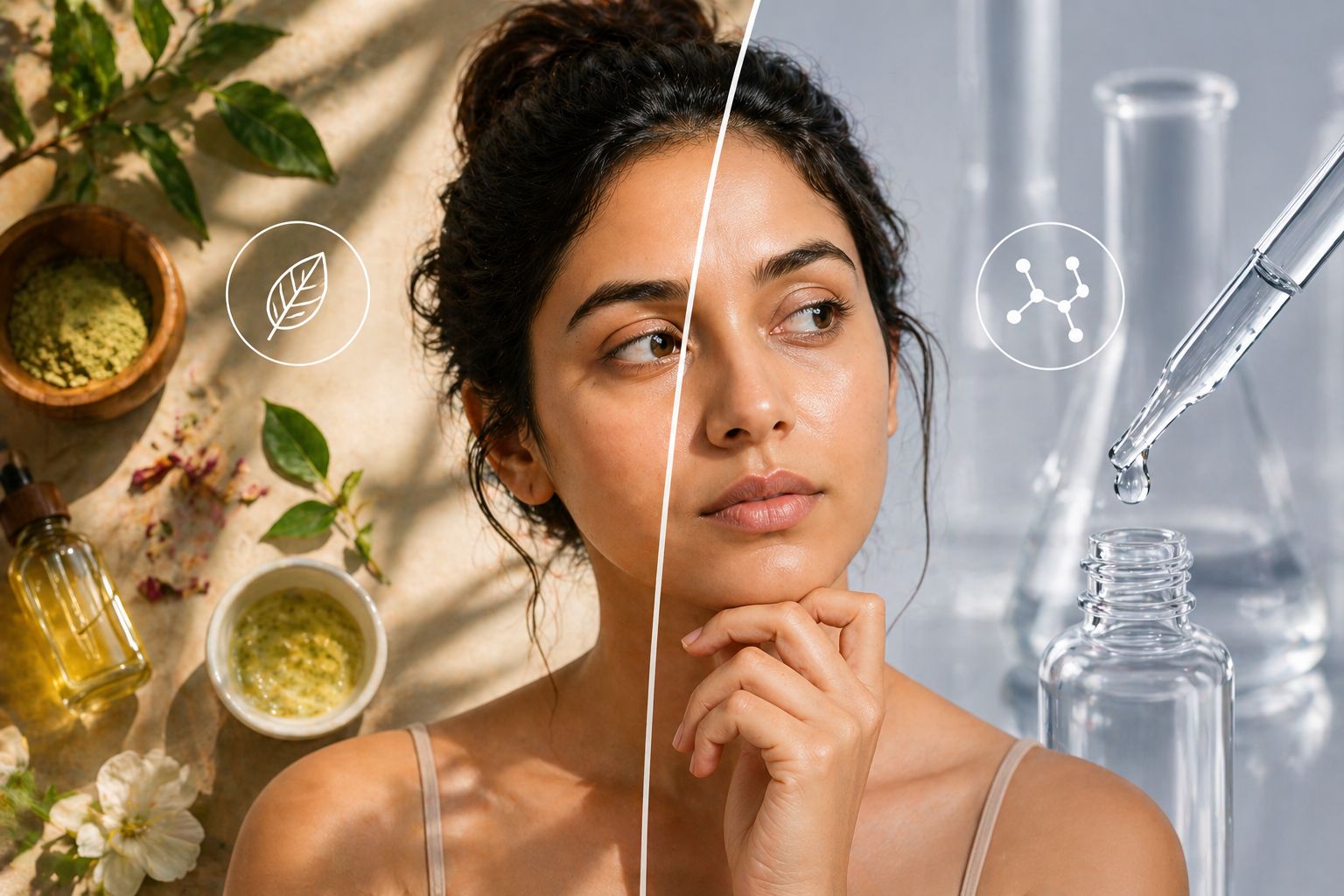
Although it doesn’t mean abandoning natural ingredients, many effective products combine natural ingredients with scientific formulations to achieve better outcomes. The real shift is not from natural to chemical. It is from assumption to understanding.
When Your Skin Starts Asking for More?
With age, skin naturally changes as collagen production slows, elasticity reduces, and the barrier becomes more sensitive to external stress. Over time, skin asks for more than just basic care, like stronger hydration support, better repair mechanisms, and ingredients for actively maintaining skin’s structure. At this time, most people realise that their current skincare routine, even if it is core natural, isn’t enough anymore.
Moving Beyond the “All or Nothing” Mindset
People are most of the time stuck between completely natural and clinical skincare. The fact is, you don’t have to pick any extremes, but can go with natural ingredient products that are science-backed formulations. Therefore, support deeper skin health and balance routine. This balanced approach is more realistic and sustainable.
The Emotional Shift: From Belief to Awareness
Understand the idea that natural isn’t always enough, which may sound uncomfortable and challenging to believe, but what is the safest choice, which comes with gaining clarity.
Rather than just reading labels, it is important to understand your skin and how it responds to skincare changes. Many people start chasing what’s trendy and end up building routines that aren’t really meant for them. This is where confidence comes in—not from what you use, but from why you use it.
What Truly Matters for Skin Health?
The key to understanding skin is that it needs consistency, balance, and support. From hydration to a strong barrier, everything matters in protecting skin from daily stress and environmental damage. It even maintains firmness and elasticity over time. Skincare should be less focused on brands and labels, yet deliver real, lasting results.
Conclusion: It Was Never About Natural vs. Not Natural
Skincare today has shifted from natural to science-backed formulas; that’s just an evolution. Sometimes, realizing that natural isn’t always enough means moving from a surface-level understanding of skincare to a deeper one. We are not saying natural ingredients aren’t valued anymore, but not every skin responds the same way. It’s just always being effective, balanced and aligned with what your skin truly needs.
Keywords : Natural Skincare Myths, Natural vs Not Natural Skincare, Science Backed Skincare, Role of Science in Skincare