
Imagine a beautifully built brick wall in which the bricks are sturdy, perfect in shape and precisely placed. Now imagine a brick wall without mortar. The wall will erode, crumble and get thin over time. The wall may not collapse overnight, but over time, the gaps will widen, bricks will shift, cracks will appear, and the wall will finally lose its integrity.
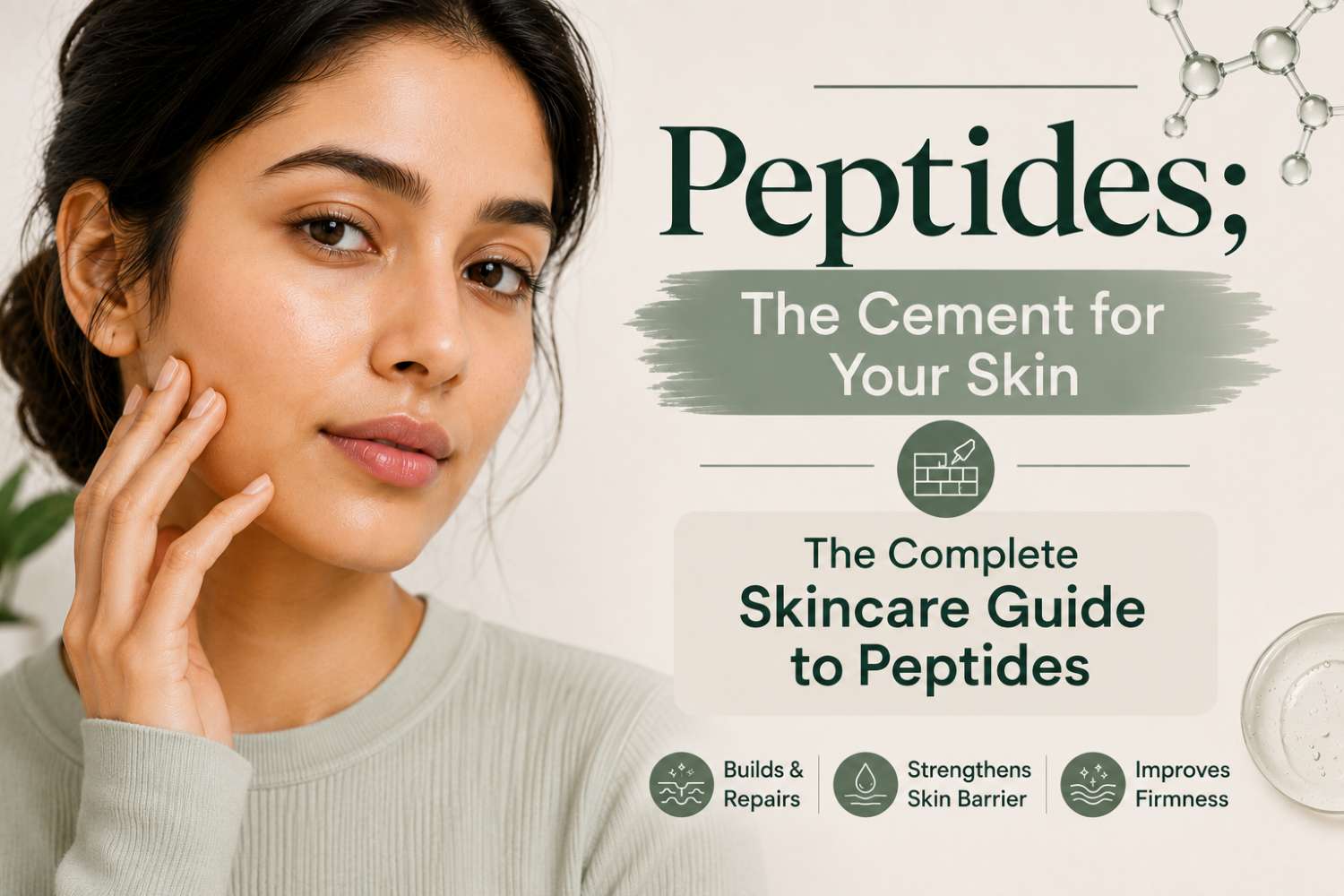
Now picture your skin as working in the same manner — Collagen and elastin are the bricks, and Peptides are the “Cement” that holds the structure intact. Your skin depends on peptides, and most people are unaware of this. Below you’ll find a complete guide to peptides — how peptides work, types of peptides, why they matter, and how to use them in skincare.
Your Skin Has a Structural Problem — and Most People Don’t Even Know It
Collagen and elastin are the building bricks — dense protein fibres that provide your skin with its bounce, volume and firmness. These remain intact with the right molecular support that holds the structure together. If the molecular support begins to degrade, the skin gradually loses density and shows visible signs of ageing, including fine lines, sagging, and dullness.
Peptides are that molecular cement — the single most important ingredient that most people are totally unaware of.
In the beauty world of unrealistic promises and overnight miracles, peptides quietly work at a cellular level. When applied, they don’t simply sit on your skin; instead, they penetrate, communicate with your skin cells, and command them to repair, rebuild, repair, and reinforce the structural foundation of the skin.
But the good news is, science has found Peptides — small chains of amino acids — that can replenish what time and environmental factors take away. If you wish to look radiant with firm, healthy skin, keep reading about this miraculous ingredient.
What Are Peptides?
Peptides are short chains of amino acids. The same building blocks of life that make proteins. When strings of two amino acids bond together, they are known as dipeptides. When three amino acid residues bond together, they form tripeptides. And when a range of 2-to-50 amino acids bond together to form longer chains, they are known as peptides. A full protein is formed when enough peptides bond together.
For your skin, three types of proteins matter the most:
- Collagen: The most abundant protein found in the human body. It is responsible for the skin’s structural support, firmness and thickness.
- Elastin: This protein gives skin the ability to stretch and snap back into place, mainly to bounce.
- Keratin: The protective protein forms the outermost skin barrier.
All of the above proteins are made of peptides, and as you age, these proteins begin to break down.
How Peptides Work in the Skin: The Science Behind the Signal
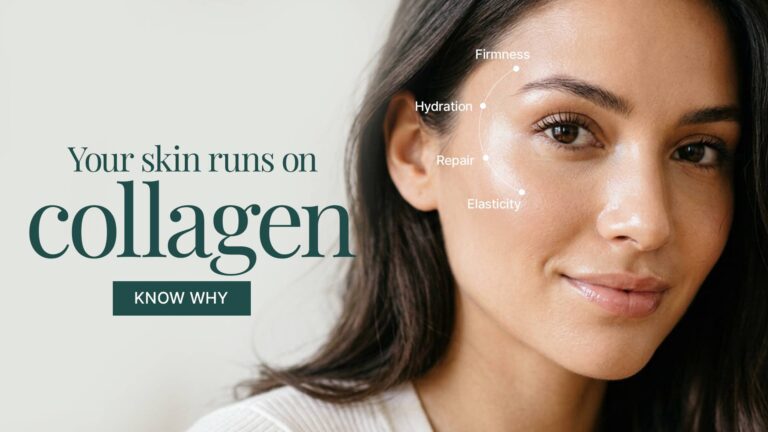
What’s interesting is, your skin doesn’t just submissively fall apart. Collagen depletion starts after age 25, at 1% per year. And by the time you reach mid-40s, you must have lost 25–30% of the skin’s collagen density. Nothing here is a cosmetic inconvenience; instead, it’s a biological reality.
When collagen breaks down, peptides, the resulting fragments, float through the dermis acting like distress signals. When your skin detects the signals, it triggers a repair response to compensate for collagen loss.
Topical skincare peptides exploit this signalling system by mimicking it. They trick and mimic the skin, which starts to think more collagen loss has happened. That’s when accelerated healing and rebuilding responses come into action to compensate for the collagen loss. Peptides are commonly known as “cell-communicating ingredients” because they can support your skin’s cellular rejuvenation and repair processes.
Types of Peptides in Skincare: What Each One Does?
The skincare industry uses many types of peptides in its skincare products, but not all work the same way. Different types of peptides perform differently in the skin. We’ve listed them below for easy understanding:
1. Signal Peptides: These are most commonly found in anti-ageing products. These penetrate deeply and interact with skin cells to stimulate collagen production. It enhances elasticity and also forms other structural proteins.
- Matrixyl (Palmitoyl Pentapeptide-4): Most studied peptides in skincare that help stimulate collagen synthesis.
- Palmitoyl Tripeptide-1: Works towards natural skin repair mechanisms.
2. Carrier Peptides: These deliver essential trace elements like copper or manganese. These penetrate to support healing and enzymatic reactions.
- Copper Peptides (GHK-Cu) – This peptide has antioxidant properties and is known for skin firming and wound-healing.
3. Neuropeptides: These peptides work similarly to Botox. These relax the facial muscles without the needle.
- Argireline (Acetyl Hexapeptide-3) – Popularly known as “topical Botox”.
- Leuphasyl – Works alongside Argireline to deliver enhanced smoothing results.
4. Enzyme Inhibitor Peptides: This peptide helps skin retain collagen and elastic that skin already has by slowing down the natural enzymatic breakdown.
- Soy peptides – Help obstruct enzymes that degrade skin proteins.
- Rice peptides – Rich in antioxidants, provide barrier protection.
Top Benefits of Peptides for Skin: What Peptides Actually Do
Peptides have earned their permanent place in evidence-based skincare. Take a look at the benefits that peptides deliver:
- Stimulates collagen synthesis to further reduce the appearance of wrinkles and fine lines
- Supporting elastin production to improve skin elasticity and firmness
- Strengthens skin barrier
- Helps the skin to retain moisture
- Builds skin’s resistance towards environmental damage
- Copper peptides help reduce inflammation and accelerate wound healing
- Even out skin texture
- Reduce open pore visibility
- Gentle for sensitive skin types
- Can be used twice a day without risk of sun sensitivity or irritation
- Can be easily paired with other actives like retinol, vitamin C, and hyaluronic acid
How to Use Peptides In Your Skincare Routine
Peptide needs to be incorporated into the skincare routine on the basis of formulation, and then on the aspect of how to layer peptides in skincare. Peptides, when used as leave-on formulas, deliver the best results. A peptide skincare product that stays on the skin longer is absorbed more readily to promote cell turnover.
Best peptide formulas are:
Serums: Most concentrated formula. It can be applied post-cleansing and before moisturiser.
Moisturisers: Good formula that delivers the best results when combined with hydrating agents.
Eye creams: Target the delicate skin around the eyes.
The nighttime repair cycle is the best time to use overnight treatments. It helps to repair and rejuvenate your skin from within. Applying a peptide-rich product before bed provides extra contact time, and that further accelerates the skin’s own regenerative rhythm.
How to layer peptides correctly:
Skincare layering is all about chemistry. Peptide molecules are fragile and can be compromised by highly acidic environments. Which means you need to avoid applying peptide serum immediately after a low-pH AHA or BHA treatment. This attempt can break down peptide chains before they are absorbed into the deeper layers of the skin.
Peptides are not photosensitive and can be used for both morning and night routines. A smart peptide layering protocol looks like this:
For Morning:
- Use a gentle cleanser
- Then apply peptide serum on damp skin for better absorption
- Use Vitamin C to brighten skin and amplify SPF benefits
- Moisturise to lock in peptides and maintain hydration
- Do not forget to apply SPF as the last step
For Night:
- Opt for double cleaning
- Use toner or essence to prepare your skin for absorption
- Now apply peptide serum on slightly damp skin for better penetration
- Opt for targeted treatments like Retinol (build retinol in your regimen gradually)
- Use ceramide-infused moisturiser to seal in actives and provide barrier support
Who Needs Peptides — And When to Start
The honest answer is ALMOST EVERYONE. The earlier you start, the healthier and more youthful your skin will remain. The best part is that peptides work best for all skin types and for various skin concerns. Take a look below, who can really benefit from peptides:
- Anyone aged 25 and older, as collagen production begins to deplete with each passing year
- Those who are experiencing early signs of ageing, like fine lines, dullness, enlarged pores, and loss of firmness
- People who can’t tolerate retinoids or have a sensitive or reactive skin type
- Anyone who is recovering from clinical skin procedures
- Anyone who has a compromised skin barrier
- Those who wish to delay skin ageing
What to Look for on a Peptide Product Label
The ingredient list is the backbone of any skincare product. Some may find reading ingredient labels like decoding a foreign language. But if you’re looking to buy the best peptide product for your own recovery, then look for at least one (ideally two or more) named peptides in the top 15–20 ingredients. Take a look at the high-efficacy peptides you must look for:
- Matrixyl (Palmitoyl Pentapeptide-4): The most studied collagen-stimulating peptide
- Matrixyl 3000 (Palmitoyl Tripeptide-1 + Palmitoyl Tetrapeptide-7): Known for dual-action, stimulates synthesis and reduces inflammation
- Matrixyl Synthe’6 (Palmitoyl Tripeptide-38): targets six structural proteins at once
- Copper Peptide (GHK-Cu): Supports remodelling, wound healing, and provides antioxidant protection
- Argireline (Acetyl Hexapeptide-3): reduces expression lines to a great extent
- Syn-Ake (Dipeptide Diaminobutyroyl Benzylamide Diacetate): smoothens wrinkles that are expression-related
- Leuphasyl (Pentapeptide-18): works synergistically with Argireline
Never grab a peptide product in which peptides are listed towards the bottom of the ingredient list, as it will not provide any functional effect.
Also, avoid peptide formulas with fragrance, as they can trigger inflammation in people with sensitive skin.
Peptides Are the Foundation, Not the Finish
Incorporating peptides in your skincare regimen will help you build a strong structural foundation for your skin. You must not forget that changes are not immediate or dramatic; instead, results are more durable in the long run. A consistent, cellular-level reinforcement can determine how healthy your skin looks and functions. Collage loss doesn’t happen overnight, but you can’t notice the visible loss until you witness the structural decline of skin. But on a good note, peptides hold the power to reverse the biological cycle of your skin to a great extent. You just have to be consistent with the routine, as the results will quietly compound over months and years and speak for themselves.
Keyphrases : what do peptides do for skin, benefits of peptides in skincare, do peptides really build collagen